
A fashion brand’s platform needs differ from a general small business in one specific, technical way: apparel is attribute-heavy.
A single style in 5 colors and 6 sizes generates 30 variants, and how a platform handles that matrix, along with lookbook-style visual merchandising, matters more here than general ease of use or marketplace integration.
This guide ranks 5 platforms specifically on variant depth, visual merchandising tools, and mobile checkout quality, since fashion shoppers browse overwhelmingly on mobile.
In this guide, you’ll learn where Shopify’s variant limits actually become a real constraint, which platforms handle apparel’s size-color-material matrix natively, and how to choose based on your catalog’s actual complexity.
Key Takeaways
- Shopify caps product variants at 100 per product across 3 options (like size, color, material), which covers most apparel but becomes a real constraint for brands with deep size runs across many colorways.
- BigCommerce handles higher variant counts more gracefully natively than Shopify, a genuine advantage for apparel brands with wide style ranges and no interest in a workaround app.
- Squarespace’s design quality suits boutique and designer fashion labels with catalogs under 500 products, where storytelling and visual impact matter more than raw variant scale.
- Fashion-specific Shopify themes like Impulse, Pipeline, and Prestige are built with quick-view modals, color swatches, and lookbook galleries as first-class features, not adapted from generic templates.
- Mobile checkout quality, including Apple Pay, Google Pay, and buy-now-pay-later options like Klarna or Afterpay, matters disproportionately for fashion, since mobile traffic share runs even higher here than general ecommerce.
Quick Comparison
| Platform | Starting Price | Variant Handling | Best For |
|---|---|---|---|
| Shopify | $25/month (annual: $23/month) | 100 variants, 3 options per product | Fast-launching brands with standard size/color catalogs |
| BigCommerce | $39/month | More native headroom above 100 variants | Wide style ranges with deep size-color-material matrices |
| WooCommerce | Free plugin + hosting ($15-$60/month) | Flexible via plugins, developer-dependent | Technical teams wanting full merchandising control |
| Squarespace | $36/month (Basic Commerce) | Capped at 3 variant options | Boutique and designer labels under 500 products |
| Wix | $29/month | Basic, best for small catalogs | Small fashion catalogs, 10-50 SKUs |
The Real Decision Factors for Apparel Sellers
A general ecommerce ranking cares about setup speed and pricing. A fashion brand’s real constraint is whether the platform’s product architecture matches how apparel is actually sold: a style, in multiple sizes, in multiple colors, often in multiple materials, each needing its own imagery.
The first real test is the variant ceiling. Shopify’s cap of 100 variants across 3 options per product covers most standard apparel, but a brand with, say, 6 colorways across 8 sizes and 2 fits exceeds that math quickly, requiring a workaround app or a platform with more native headroom.
The second test is visual merchandising: does the platform support lookbook-style collection pages, swatch-to-image binding (so selecting Navy shows the navy product photos), and quick-view modals natively, or does that require stitching together multiple apps.
We evaluated each platform on native variant capacity, built-in visual merchandising tools specific to apparel, and mobile checkout quality including buy-now-pay-later support, cross-referenced against the BigCommerce vs Shopify comparison for the specific tradeoff that matters most once a fashion catalog’s variant complexity grows.
Shopify: Best for Fast-Launching Brands with Standard Catalogs

Shopify’s fashion-specific theme library, Dawn, Impulse, Pipeline, and Prestige among them, is built from the ground up for how people shop apparel online: quick-view modals, color swatch selectors, size guides, and lookbook galleries as native features, not adapted afterthoughts.
For most fashion brands with a standard size-and-color catalog, that depth plus the largest app ecosystem makes Shopify the fastest path to a professional-looking launch.
Key Features
Fashion-specific theme library: Impulse, Pipeline, and Prestige are purpose-built for apparel, with swatch selectors and lookbook galleries as core features.
Per-variant imagery: Multiple images per variant combination, so selecting a specific size and color shows the matching product photos.
100 variants per product: Covers most standard apparel combinations of size, color, and material without a workaround.
Mobile-optimized checkout: Native Apple Pay and Google Pay integration, critical given fashion’s disproportionately high mobile traffic share.
Fashion app ecosystem: Size recommendation tools, virtual try-on apps, and print-on-demand integrations like Printful for custom apparel.
Pros
- The deepest fashion-specific theme library of any platform, with merchandising features built as core functionality, not bolted on.
- The largest app ecosystem covers fashion-specific needs like size recommendation and returns management without custom development.
Cons
- The 100-variant, 3-option cap becomes a real constraint for brands with deep size runs across many colorways, requiring a workaround app like Infinite Options.
- The 2% transaction fee on the Basic plan applies unless using Shopify Payments, worth checking against your specific payment processor relationships.
Who It’s Best For
Fashion brands with a standard size-and-color catalog wanting the fastest path to a professional, apparel-optimized launch.
Pricing
Basic plan is $25/month billed monthly or $23/month billed annually, with a 2% transaction fee on external payment gateways, waived when using Shopify Payments.
BigCommerce: Best for Wide Style Ranges with Deep Variant Matrices
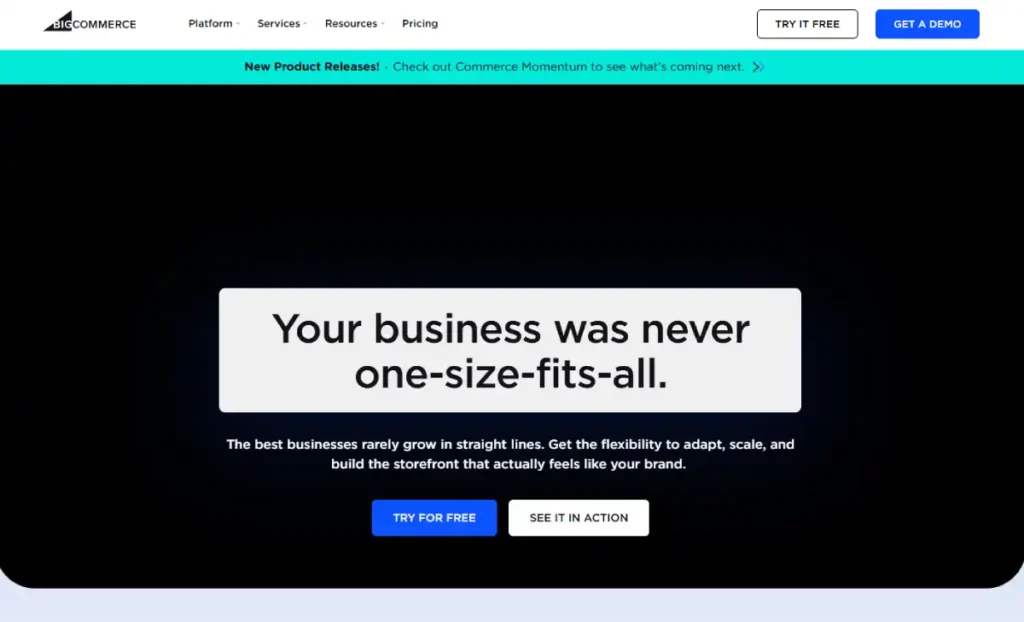
For apparel brands whose catalog genuinely exceeds Shopify’s 100-variant ceiling, wide style ranges with many colorways and multiple fits, BigCommerce’s native catalog architecture handles higher variant counts more gracefully without requiring a workaround app, removing a layer of engineering complexity that mid-market apparel brands otherwise absorb.
Our full BigCommerce review breaks down its plan tiers and features further.
Key Features
Higher native variant headroom: Handles attribute-heavy fashion catalogs more gracefully than Shopify’s fixed cap, without a third-party app.
Zero transaction fees on every plan: A direct margin advantage for high-volume fashion brands processing significant order counts.
Advanced product filtering: Built-in filtering by size, color, and material for large, complex apparel catalogs.
Native multi-channel selling: Connects to marketplaces and social channels without requiring as many separate apps as a comparable Shopify setup.
Strong B2B capability: Useful for fashion brands also selling wholesale alongside a direct-to-consumer store.
Pros
- Genuinely removes the variant-count engineering problem that mid-market apparel brands hit on Shopify without an app workaround.
- Zero transaction fees preserve margin at the volume where fashion brands typically process meaningful order counts.
Cons
- The theme library is less deep specifically for fashion merchandising compared to Shopify’s dedicated apparel themes.
- The steeper learning curve is a real cost in team ramp-up time compared to Shopify’s more intuitive dashboard.
Who It’s Best For
Apparel brands with wide style ranges and deep size-color-material matrices that have outgrown Shopify’s native variant ceiling.
Pricing
Standard plan is $39/month with no transaction fees, capping at $50K in annual sales before requiring an upgrade to Plus ($105/month).
WooCommerce: Best for Technical Teams Wanting Full Merchandising Control
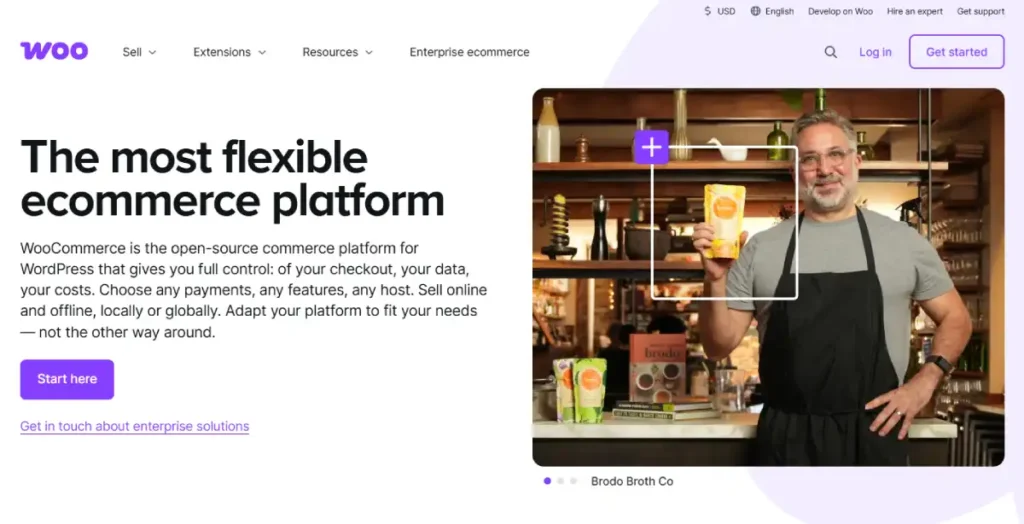
WooCommerce places no hard variant cap, since its architecture is entirely plugin-dependent, giving a technical fashion team the flexibility to build a genuinely custom merchandising experience, swatch behavior, lookbook layouts, size guide logic, tailored to a specific brand rather than working within a platform’s fixed template structure.
Key Features
No hard variant cap: Product variation depth is limited only by plugin configuration and hosting capacity, not a platform-imposed ceiling.
Full merchandising customization: Complete control over swatch behavior, lookbook layouts, and size guide presentation through custom development.
No platform transaction fees: Only standard payment gateway fees apply, preserving more margin per sale.
Deep WordPress content integration: Strong for fashion brands building an editorial or lookbook-style blog alongside the store.
Flexible payment gateway support: Klarna, Afterpay, and other buy-now-pay-later options integrate without platform restrictions.
Pricing
Core plugin is free. Realistic total cost including hosting, premium themes, and merchandising plugins runs $800 to $3,000/year for a growing fashion store.
Squarespace: Best for Boutique and Designer Labels Under 500 Products
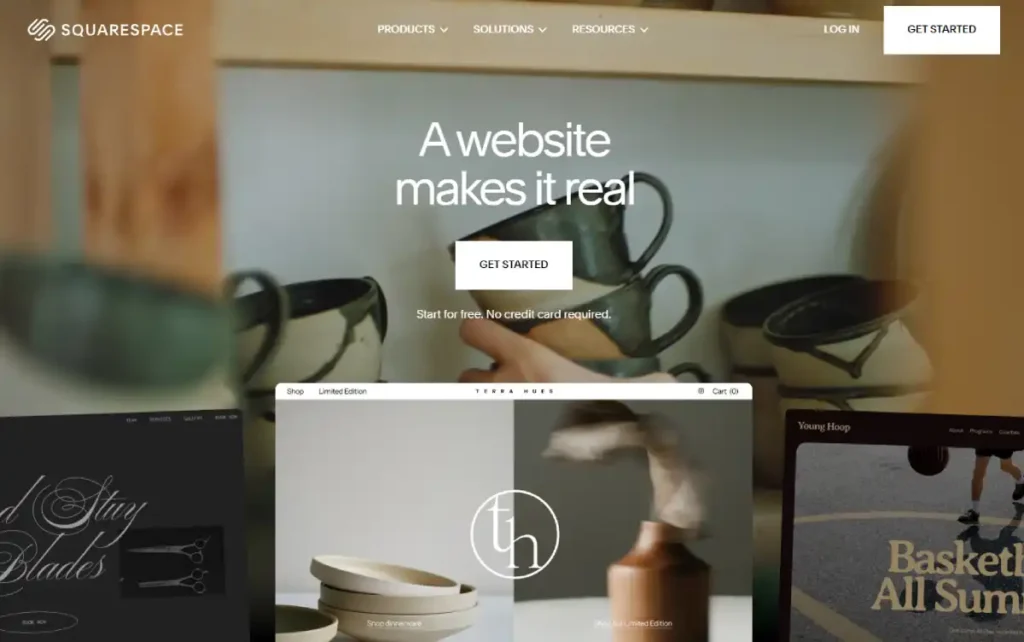
For a designer or boutique fashion label where visual storytelling matters as much as the product itself, Squarespace’s best-in-class template design gives a smaller, curated collection a genuinely premium presentation. Its 3-option variant cap and thinner app ecosystem make it a weaker fit once a catalog grows past a tightly curated size.
See our full Squarespace review for more on its broader feature set.
Key Features
Best-in-class template design: The strongest visual presentation of any platform here, suited to storytelling-driven fashion brands.
Portfolio-style collection pages: Particularly effective for designer labels and sustainable fashion brands where the story matters as much as the product.
Clean, professional checkout: A polished purchase flow, though with fewer fashion-specific app integrations than Shopify.
Zero transaction fees: Via Squarespace Payments on Commerce plans.
Strong built-in blog: Useful for brands building an editorial or behind-the-scenes content presence alongside the store.
Pricing
Basic Commerce is $36/month, Advanced Commerce is $65/month, both with 0% platform transaction fees via Squarespace Payments.
Wix: Best for Small Fashion Catalogs, 10-50 SKUs
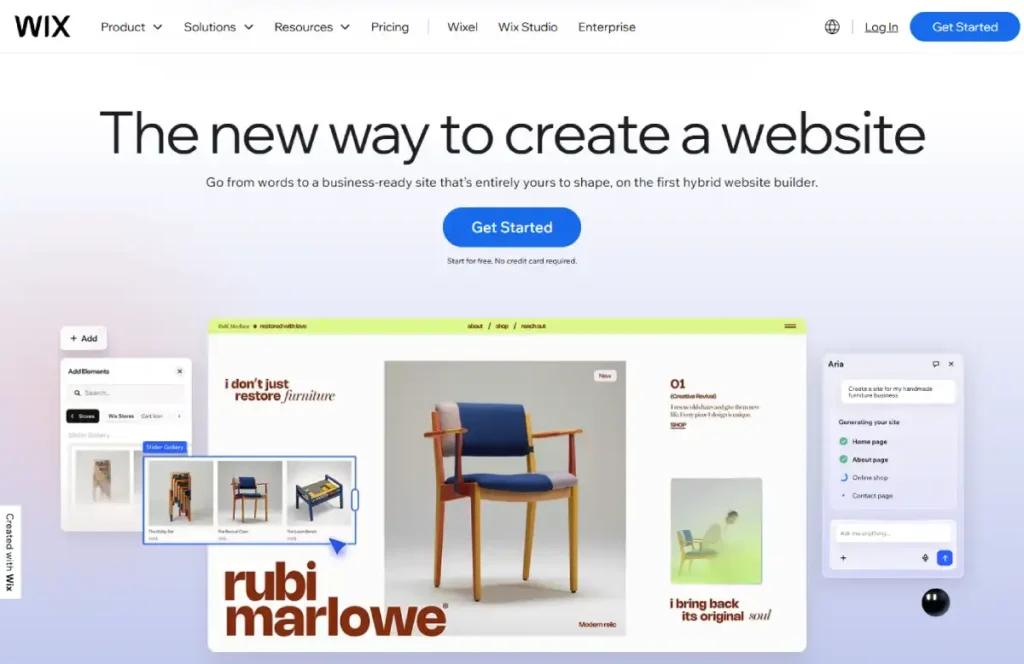
Wix works well for a fashion brand with a genuinely limited product line, roughly 10 to 50 SKUs, where its drag-and-drop design flexibility and low-risk setup outweigh its shallower variant and inventory management tools. Growth past that range typically surfaces real limitations that push brands toward Shopify or BigCommerce.
Our full Wix review breaks down its broader feature set.
Key Features
Drag-and-drop visual editor: The most intuitive layout control for a small fashion brand without design resources.
Wix Payments: No transaction fees when using native payment processing.
Unlimited products: No hard cap, though variant and inventory management tools stay comparatively basic at scale.
800+ templates: A large library likely including options suited to fashion presentation.
Fast, low-risk setup: A working store can be live within a single session for a small, curated catalog.
Pricing
Business plans start at $29/month, with no transaction fees via Wix Payments.
Apparel Platform Pitfalls to Avoid
Choosing a Platform Before Mapping Your Real Variant Count
Calculate your actual maximum variant count, sizes times colors times materials, for your most complex style before choosing a platform. A brand assuming Shopify’s 100-variant cap is plenty without doing this math sometimes discovers the constraint mid-build.
Underestimating Mobile Checkout as a Fashion-Specific Priority
Fashion shopping skews even more mobile-heavy than general ecommerce. A platform with weak native mobile checkout, missing Apple Pay, Google Pay, or buy-now-pay-later options, costs more in fashion than in most other categories.
Prioritizing Design Over Returns Management
Clothing return rates run higher than most product categories due to sizing uncertainty. A platform or app ecosystem without self-serve size-exchange and return portal tools creates real operational burden that design quality alone can’t offset.
Building for Today’s Catalog Size Without Planning for Growth
A brand launching with 20 SKUs but planning rapid seasonal expansion should weigh a platform’s variant and catalog ceiling against that trajectory, not just current needs, to avoid a disruptive migration mid-growth.
How to Choose eCommerce Platform for a Fashion Brand
If your catalog fits within roughly 100 variants per style and you want the deepest fashion-specific theme and app ecosystem, Shopify is the strongest starting point.
If your style range genuinely exceeds Shopify’s variant ceiling across many colorways and fits, BigCommerce’s native catalog architecture removes that constraint without a workaround app.
If you have technical resources and want a fully custom merchandising experience without platform limits, WooCommerce offers the most flexibility.
If you’re a boutique or designer label under 500 products where visual storytelling is the priority, Squarespace’s design quality is worth its narrower variant and app ecosystem.
If your catalog is genuinely small, 10 to 50 SKUs, Wix’s low-risk, fast setup is a reasonable starting point before scaling further.
FAQ’s
Does Shopify’s 100-variant limit really matter for most fashion brands?
For a standard apparel catalog, sizes and a handful of colors, 100 variants is usually enough. It becomes a real constraint for brands with deep size runs (XS through 3XL) across many colorways and multiple fits or materials, where the math can exceed 100 combinations per style.
What’s the best platform for a designer or boutique fashion label?
Squarespace is the strongest fit for a boutique or designer label with a catalog under 500 products, where visual storytelling and premium presentation matter more than raw variant scale or app ecosystem depth.
Do I need BigCommerce instead of Shopify for a large fashion catalog?
Only if your actual variant math exceeds Shopify’s 100-variant, 3-option cap per product. If your catalog fits within that ceiling, Shopify’s deeper fashion-specific theme and app ecosystem likely outweighs BigCommerce’s higher variant headroom.
How important are buy-now-pay-later options like Klarna and Afterpay for fashion?
Meaningfully important. Fashion shoppers use buy-now-pay-later options at a higher rate than many other categories, and a platform or payment setup without native support for these options can measurably affect conversion.
What’s the difference between this guide and a general small business guide?
This guide is scored specifically on apparel’s technical needs: variant matrix depth, lookbook merchandising, and mobile checkout quality. A general small business guide evaluates integration with existing operations rather than fashion-specific catalog architecture.
Can I sell fashion wholesale and direct-to-consumer on the same platform?
Yes, though the wholesale side has its own specific needs (matrix ordering, seasonal sell-in workflows) that general platforms treat as secondary. BigCommerce has stronger native B2B features than Shopify for this specific use case, and dedicated apparel wholesale platforms exist for brands with heavy wholesale volume.
Final Thoughts
For a fashion brand, the platform decision comes down to whether your catalog’s real variant complexity fits within Shopify’s native ceiling or genuinely requires BigCommerce’s deeper catalog architecture.
Most standard apparel catalogs fit comfortably within Shopify’s fashion-specific ecosystem, while wide style ranges with deep size-color-material matrices are the clearest signal to consider BigCommerce instead.
If you’re weighing Shopify against BigCommerce specifically for your fashion catalog’s scale, or want the full platform economics before committing, the BigCommerce vs Shopify comparison and the Shopify’s transaction fees breakdown are good next stops.