
Can you start an ecommerce business with no money at all? Almost. Most people who try this end up spending $50 to $200 within the first few months.
Not thousands. Just a domain name, one product sample, and maybe a small test ad.
That is the honest answer. This guide explains exactly where that small cost comes from, which business models actually work with almost no money, and which start-for-free claims you should not fully trust.
Key Takeaways
- A true $0 launch is rare. A launch under $200 is realistic. The difference is usually just a domain name and one product sample.
- No inventory does not mean no cost. Dropshipping and print on demand skip the cost of buying stock. You still pay for the platform, apps, and eventually ads.
- Free trials are not free forever. Once the trial ends, you either pay or lose your store.
- Selling a service costs the least. There is no product to buy, test, or ship. You only need time and a way to deliver the work.
- The biggest mistake is underestimating time, not money. Most people spend far more hours on this than they expect.
Why Completely Free Is Not Quite True
Here is the simple version. You can build a store, list products, and post on social media without spending anything. That part really is free.
But two things almost always cost money eventually.
First, your free trial ends. Every major platform gives you a free trial. After that, you need to pay for a plan, or your store stops working.
Second, you need at least one real domain and one real product sample. A domain is cheap, usually around $15 a year.
A product sample lets you check quality before a real customer does. Skipping this step is common. It is also the reason many new sellers get bad reviews in their first month.
Together, these two costs usually land between $50 and $200. That is the real starting point for most sellers, not $0.
What This Actually Costs, by Business Model
| Business Model | Realistic Startup Cost | What You Actually Pay For |
|---|---|---|
| Dropshipping | Under $200 | A domain, one product sample, a small test ad |
| Print on demand | Under $200 | A domain, plus platform and app fees |
| Digital products | Under $100 | Mostly your own time, small platform fees |
| Selling a service | Close to $0 | Your time and basic delivery tools |
| A branded store with real inventory | $500 to $10,000+ | Inventory, design, real ad spend |
Four Business Models That Actually Work With Almost No Money
1. Dropshipping
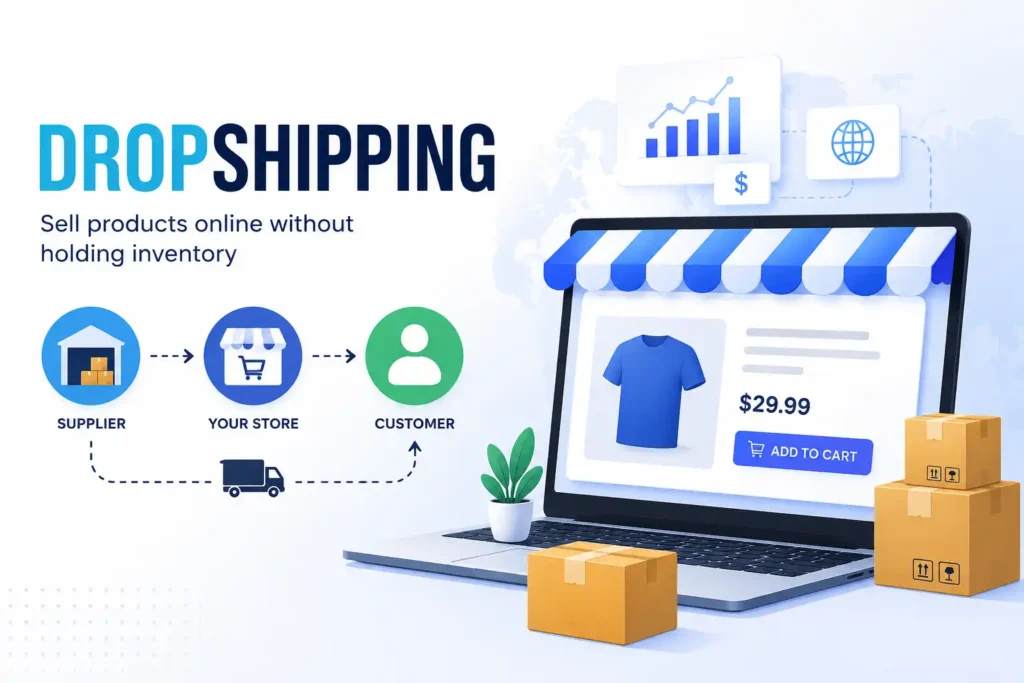
You never buy inventory yourself. When a customer orders, your supplier ships it directly to them.
This actually works with very little money. But it only works well if you actually research your product and check your supplier first. Skipping that step is the most common reason dropshipping stores fail.
For the full process, including how to pick a product and vet a supplier, see this cluster’s dropshipping guide.
2. Print on Demand
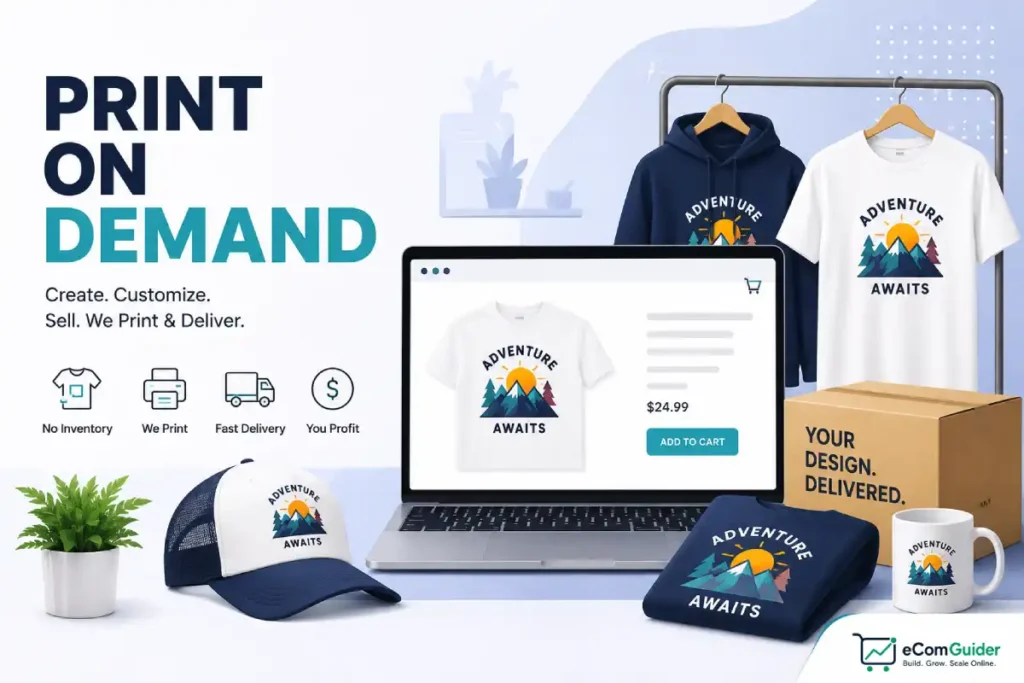
A supplier prints your design onto a product only after someone buys it. You never hold stock.
Setup itself is close to free. Your only real cost is the platform and any apps you add. For a full comparison of the top providers, see this cluster’s print-on-demand guide.
3. Digital Products
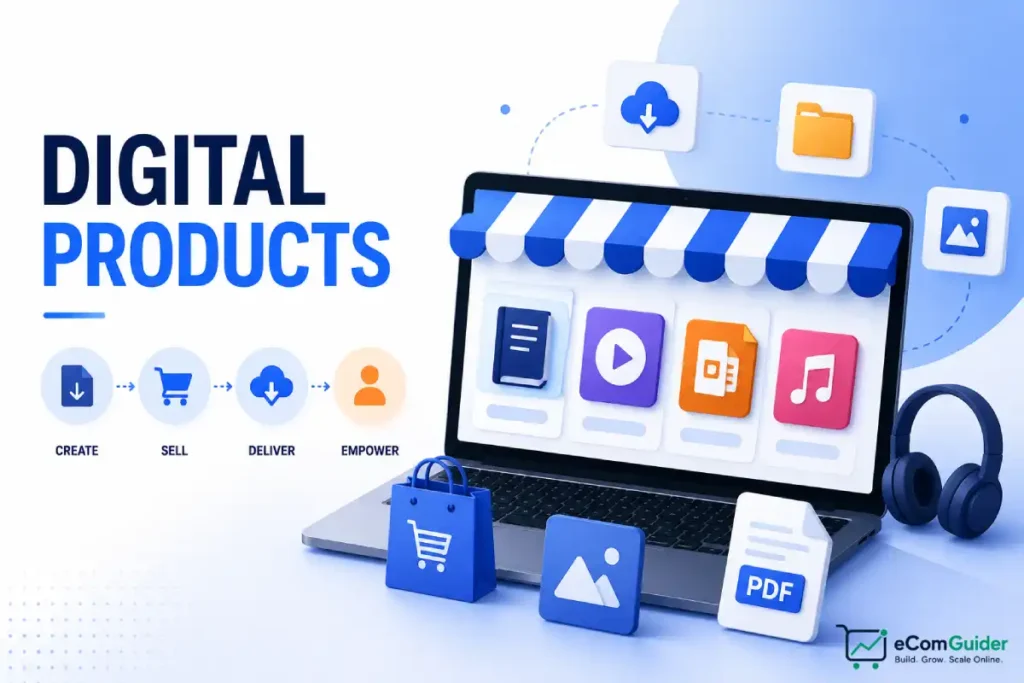
Think templates, ebooks, or presets. Once you make the file, it costs nothing to sell it again and again.
Your real investment here is time, not money. Most platforms let you list a digital product with no upfront fee.
4. Selling a Service
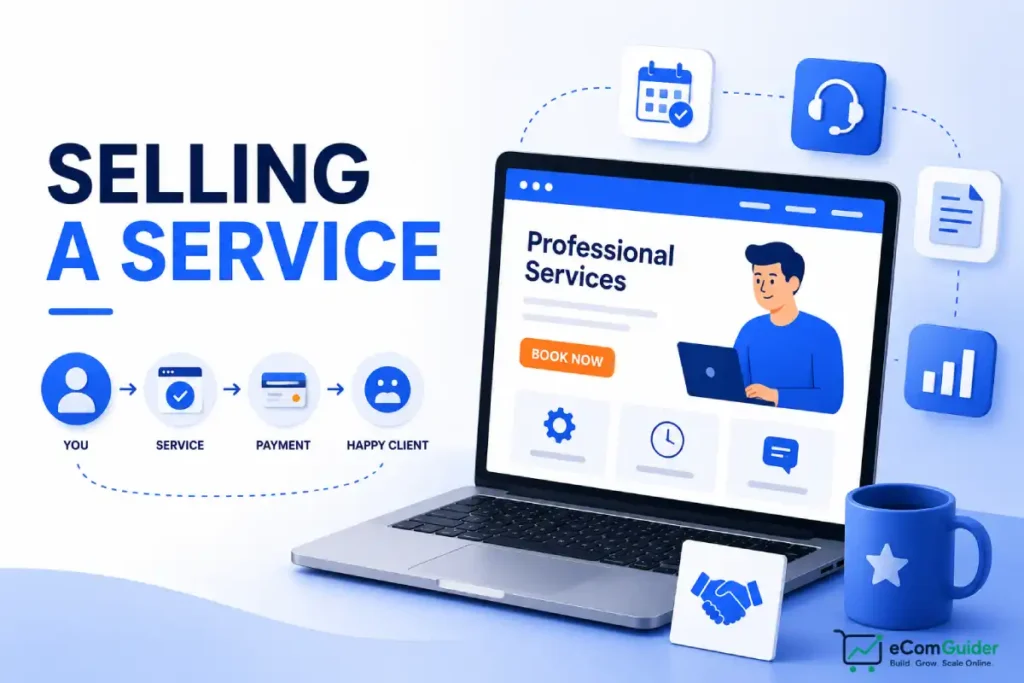
This is the cheapest model on this list. Design work, consulting, or virtual assistant work does not require a product at all.
You only need your own skill and a simple way to deliver the work and get paid.
Claims You Should Not Fully Trust
Some common advice sounds better than it actually is. Here is what to know before you believe it.
Start completely free, no credit card needed. That part is true during the trial. Once the trial ends, you need to pay or your store stops working. This surprises a lot of beginners.
WooCommerce is free, so it is cheaper than Shopify. WooCommerce itself has no monthly fee. But you still need hosting, which usually costs $5 to $30 a month. Once you add hosting, security, and a few apps, the total cost often ends up close to a basic Shopify plan anyway.
Skip the product sample to save money. This is a real risk, not just a shortcut. Skipping the sample is one of the most common reasons new sellers get complaints about product quality. A $30 to $50 sample before launch is worth the cost.
No money means no real work. This is the biggest myth of all. People who succeed with almost no money spend a lot more time instead. That is the actual trade-off.
Free Tools Worth Using
- Canva or Photopea for product photos and simple graphics, both are actually free
- Google Trends to check if people are actually searching for your product idea
- Your platform’s free trial to build and test your store before spending anything
- Organic social media posts as your first source of traffic, before you spend on ads
Step-by-Step: Getting Started With Almost No Money
- Pick your model. Choose based on what you actually have. Time and a skill fit service selling or digital products. Comfort managing a supplier fits dropshipping or print on demand.
- Start your free trial. Build your store using free tools. Do not pay for a premium theme yet.
- Check for real demand. Use Google Trends and look at what similar sellers are already doing. Do this before you spend a single dollar on ads.
- Spend your first small amount deliberately. This usually means a domain once your trial ends, and one product sample if you are selling a physical product.
- Get your first sale organically. Post in relevant online communities and on social media before you try paid ads.
- Reinvest as you go. Use your first bit of revenue for a small test ad or another product sample, instead of trying to stay at zero forever.
Mistakes That Have Nothing to Do With Money
- Underestimating how much time this takes. Product research, writing listings, and answering customer questions all take real hours.
- Trying to sell on too many platforms at once. Focus on one place until it works.
- Not setting aside real time for the business. Squeezing it into spare minutes slows everything down.
- Expecting fast results. Most real success takes longer than people expect. That is normal, not a sign of failure.
FAQ for Starting an eCommerce Business with No Money
Can I actually start an ecommerce business with zero dollars?
Almost. Most sellers end up spending $50 to $200 within the first few months on a domain and a product sample. A true, permanent $0 is rare.
Which business model costs the least to start?
Selling a service. There is no product to buy, test, or ship, just your time and a way to deliver the work. Digital products are a close second.
Is WooCommerce actually free compared to Shopify?
Not really. WooCommerce has no monthly fee, but you still need hosting, usually $5 to $30 a month. Once you add hosting and a few apps, the total often ends up close to Shopify’s basic plan.
Should I skip the product sample to save money?
No. Skipping it is one of the most common reasons new sellers get quality complaints. A $30 to $50 sample before launch is worth spending.
What is the biggest mistake people make when starting with no money?
Underestimating how much time it takes, not underestimating the cost. Most people spend far more hours than they planned on.
Do free trials really stay free?
No. Once the trial ends, you either pay for a plan or your store stops working. This catches a lot of first-time sellers off guard.