
Selling ebooks, courses, templates, or software has almost nothing in common with selling a physical product, and most general best ecommerce platform rankings miss that entirely. There’s no shipping, no inventory, no packaging.
The dominant filter here is secure file delivery, license and download protection, and how much of every sale the platform takes as a fee, since digital products often run on thinner per-unit effort but real piracy risk.
This guide ranks 6 platforms specifically on that basis. In this guide, you’ll learn which platform actually protects your files from unauthorized sharing, how the fee structures compare at real sales volume, and which common mistakes cost digital creators the most margin.
Key Takeaways
- Gumroad’s flat 10% plus 50 cent fee has no monthly cost, which makes it cheap at low volume but genuinely expensive once sales are consistent, since the percentage never drops.
- Payhip’s free plan charges 5%, half of Gumroad’s rate, and drops to 0% on its $99/month Pro plan, a real advantage once monthly revenue justifies the subscription.
- Sellfy has no free plan at all, only a 14-day trial, but charges no additional transaction fees beyond its $29/month subscription, which can be cheaper than Gumroad or Payhip above a certain sales volume.
- Shopify requires a separate digital delivery app (Digital Downloads is free) since it isn’t built specifically for digital products, but offers the most branding control and lowest long-term fees at real scale.
- Podia bundles digital downloads, courses, and memberships with zero transaction fees at $39/month, a strong fit if you’re selling more than one digital product type.
Quick Comparison
| Platform | Starting Price | Transaction Fee | Best For |
|---|---|---|---|
| Gumroad | Free | 10% + $0.50 per sale | Fastest path to a first sale, no upfront cost |
| Payhip | Free, or $29-$99/month | 5% (free), 2% (Plus), 0% (Pro) | Lower fees than Gumroad at every tier |
| Sellfy | $29/month (no free plan) | 0% beyond subscription | Predictable cost at consistent volume |
| SendOwl | No free plan (trial only) | 0% beyond subscription | Adding secure delivery to an existing site |
| Shopify | $25/month + free Digital Downloads app | 2% (Basic, non-Shopify Payments) | Full branding control and lowest fees at scale |
| Podia | $39/month | 0% | Selling downloads, courses, and memberships together |
The Real Decision Factors for Digital Creators
A physical product platform ranking cares about shipping integrations and inventory sync. None of that applies here.
The first real filter is file delivery security: does the platform prevent a customer from sharing a download link or PDF with people who didn’t pay, through expiring links, watermarking, or license key generation.
The second filter is fee structure at realistic volume, not just the advertised entry price. A flat percentage fee like Gumroad’s 10% looks cheap when you’re making your first few sales, but becomes a genuinely expensive ongoing cost once revenue is consistent, at which point a flat monthly subscription with 0% transaction fees, like Sellfy or Podia, becomes the cheaper option in real dollar terms.
We evaluated each platform based on digital delivery, anti-piracy protection, and support for the digital product types most sellers actually offer.
We also compared total costs at $1,000, $5,000, and $10,000 in monthly sales, using our best free ecommerce platform guide to benchmark free-tier pricing where relevant.
Gumroad: Best for the Fastest Path to a First Sale
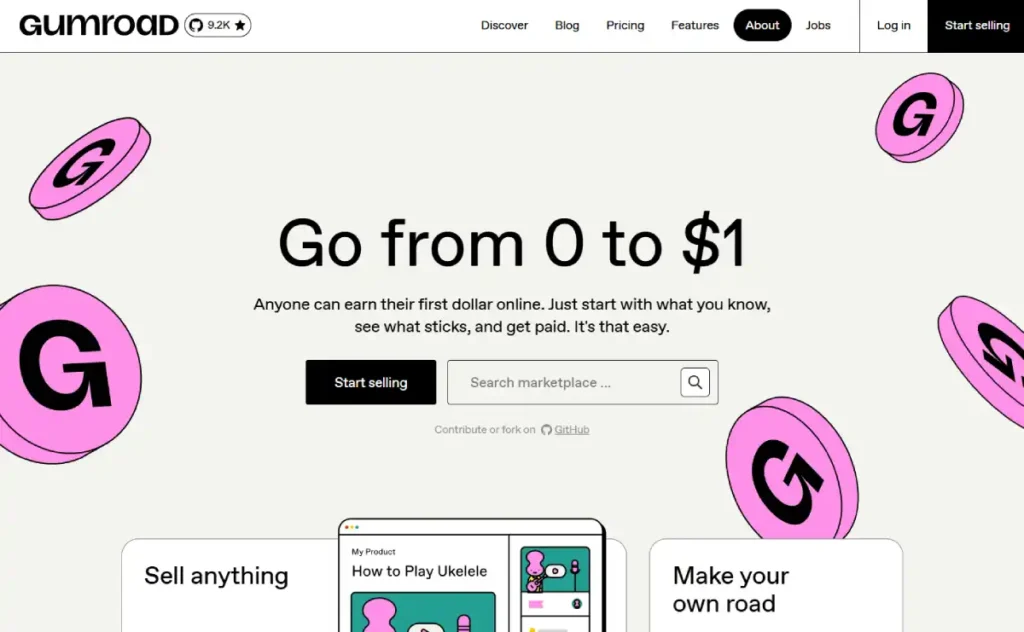
Gumroad’s entire pitch is speed: upload a file, set a price, share a link, and you’re selling within minutes, with zero monthly cost and no website required. That simplicity has a real cost once revenue grows, since Gumroad’s flat 10% plus 50 cent fee never drops regardless of volume, unlike percentage-based competitors that offer lower tiers as you scale.
Our Gumroad review covers its broader feature set in more depth.
Key Features
Instant product page creation: No website or storefront build required, just upload and share a link.
Broad digital product support: Ebooks, software, music, videos, memberships, and pay-what-you-want pricing all supported natively.
Built-in discoverability: Gumroad’s own marketplace can surface products to new buyers beyond your own audience.
License key generation: Native support for software sellers who need to issue and track license keys.
VAT handling: Automatic EU tax compliance handled by the platform, a real time-saver for international sales.
Pros
- The fastest possible path from idea to first sale, with zero upfront cost or website requirement.
- Broad product type support means a single account handles ebooks, software, and subscriptions without separate tools.
Cons
- The flat 10% plus 50 cent fee is meaningfully higher than percentage-based competitors once sales volume is consistent, since it never drops.
- Storefront customization is limited compared to a dedicated ecommerce platform, a real constraint for a creator building a distinct brand.
Who It’s Best For
Creators testing a single digital product or validating demand quickly, before committing to a subscription-based platform.
Pricing
Free to start, with a flat 10% + $0.50 fee per sale and no monthly subscription cost.
Payhip: Best for Lower Fees Than Gumroad at Every Tier
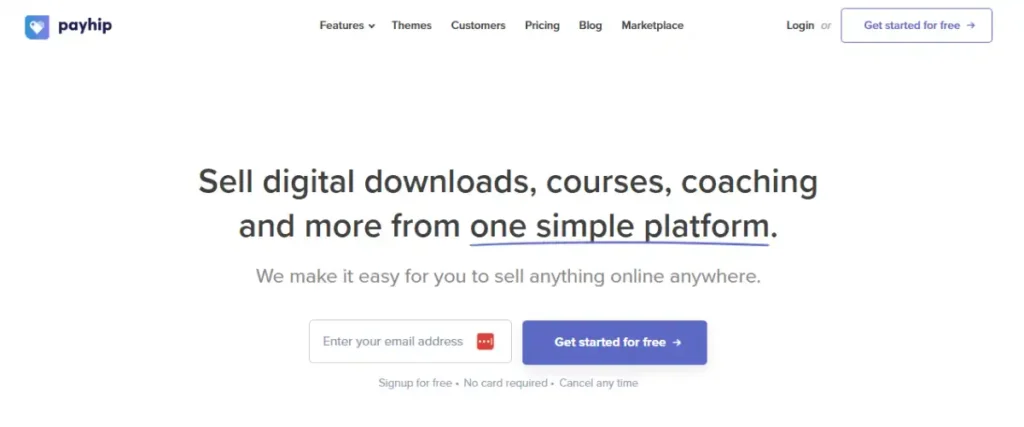
Payhip’s free plan charges half of Gumroad’s rate, 5% instead of 10%, and its paid tiers drop that further to 2% on the $29/month Plus plan and 0% on the $99/month Pro plan. For a creator who has outgrown testing but isn’t ready for a full ecommerce platform, Payhip’s tiered fee structure offers a clearer upgrade path than Gumroad’s flat rate.
Key Features
Tiered fee structure: 5% free, 2% at $29/month, 0% at $99/month, giving a clear cost-reduction path as revenue grows.
Automatic VAT compliance: Handles EU tax requirements natively, useful for sellers with international customers.
Built-in affiliate marketing: Native referral and affiliate tools without a separate app.
Digital product marketplace: An additional discovery channel beyond your own storefront, similar to Gumroad’s model.
Subscription and membership billing: Native recurring billing support for creators selling access rather than one-time downloads.
Pros
- Lower transaction fees than Gumroad at every tier, including the free plan.
- A genuinely free forever plan exists, unlike Sellfy or SendOwl, which require a paid subscription after a trial period.
Cons
- Marketing and storefront customization tools remain fairly basic even on paid tiers compared to a full ecommerce platform.
- The free plan’s 5% fee is still meaningful at real volume, making the $99/month Pro plan the better long-term value once sales are consistent.
Who It’s Best For
Digital creators who want lower fees than Gumroad without committing to a full ecommerce platform, particularly those selling subscriptions or memberships alongside downloads.
Pricing
Free plan with 5% transaction fee. Plus is $29/month (2% fee).
Pro is $99/month (0% fee).
Sellfy: Best for Predictable Cost at Consistent Volume
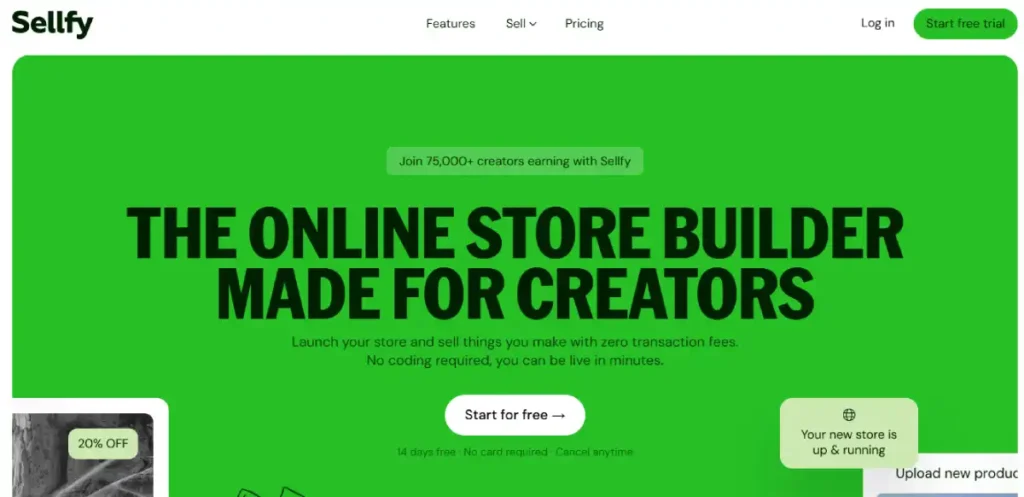
Sellfy has no free plan, only a 14-day trial, which is a real barrier for a creator still validating an idea. Once past that stage, its $29/month subscription with no additional transaction fees becomes genuinely predictable, and can cost less than Gumroad or Payhip’s free tier once monthly sales are consistent rather than sporadic.
Key Features
No transaction fees beyond subscription: A flat monthly cost regardless of sales volume, unlike percentage-fee competitors.
Built-in print-on-demand support: Sell physical merchandise alongside digital products from the same store, useful for creators with a hybrid catalog.
Email marketing tools: Native campaign tools without a separate subscription.
Piracy protection: Built-in tools to prevent unauthorized file sharing on digital downloads.
Upgrade threshold at $10K annual sales: Forces a move to the $79/month plan once revenue crosses that mark, worth planning for in advance.
Cons
- No free plan means real upfront cost before validating whether a product sells at all.
- The forced upgrade to $79/month once annual sales cross $10,000 is a detail easy to miss when comparing sticker prices.
Who It’s Best For
Creators with an already-validated digital product who want predictable monthly costs without a percentage fee eating into consistent sales.
Pricing
Starts at $29/month (annual billing), no free plan, 14-day trial only. Upgrades to $79/month required past $10K in annual sales.
SendOwl: Best for Adding Secure Delivery to an Existing Site
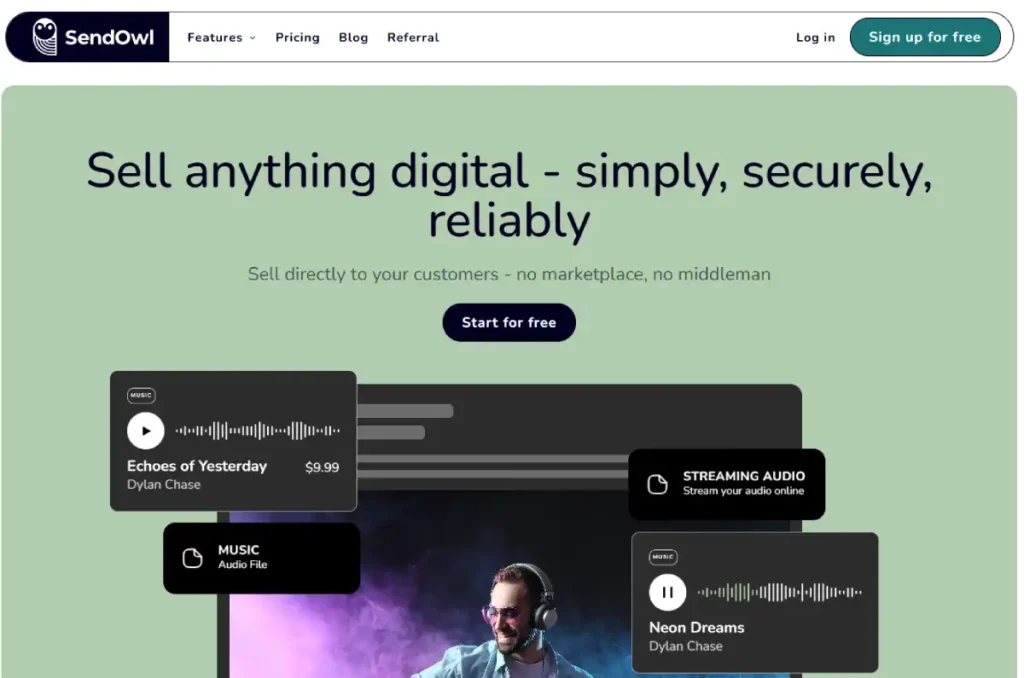
SendOwl’s focus is narrower and more specific than a full storefront platform: fast, secure digital file delivery for a creator who already has a website or audience and just needs a reliable buy now checkout button. Its file protection tools, PDF stamping, download limits, and two-factor authentication, are among the most security-focused of any platform on this list.
Key Features
PDF stamping and watermarking: Embeds buyer information directly into downloaded files to discourage unauthorized sharing.
Download link time limits: Automatically expires download links after a set period, reducing casual file-sharing risk.
License key delivery: Native generation and delivery for software sellers.
Quick Sell links: Generates a shareable purchase link and embeddable code snippet without a full storefront build.
No transaction fees: Flat subscription pricing with no percentage cut of sales.
Cons
- No free plan exists beyond a limited trial, a real barrier for early testing compared to Gumroad or Payhip’s free tiers.
- Storefront design is minimal by design, a poor fit for a creator wanting a fully branded standalone store.
Who It’s Best For
Creators or existing website owners who need a secure, dedicated digital delivery checkout rather than a full storefront rebuild.
Pricing
No free plan; a limited trial is available. Paid plans are priced lower than Sellfy at comparable tiers, with no per-transaction fee.
Shopify: Best for Full Branding Control and Lowest Fees at Scale

Shopify isn’t built specifically for digital products, so it requires a separate delivery app, Digital Downloads, which is free and handles file delivery automatically after checkout. What Shopify offers instead is complete storefront branding control and the lowest long-term fee structure of any platform here once sales volume is real, since its 2% (or 0% with Shopify Payments) beats every percentage-based competitor at scale.
Key Features
Free Digital Downloads app: Automates secure file delivery immediately after purchase, integrated directly into Shopify checkout.
Full storefront branding control: The most customizable store design of any platform on this list, unlike the templated checkout pages of dedicated digital sellers.
Mixed cart support: Sell physical and digital products together in a single checkout, useful for creators with a hybrid catalog.
Lower fees at scale: 2% transaction fee on Basic (waived with Shopify Payments) is meaningfully lower than Gumroad’s 10% once sales are consistent.
Broader app ecosystem: Access to email marketing, upsell, and analytics apps beyond what dedicated digital platforms typically offer.
Pros
- The lowest real transaction cost at meaningful sales volume of any platform here, especially with Shopify Payments.
- Full branding and storefront control, avoiding the templated look of dedicated digital-product platforms.
Cons
- Requires installing and configuring a separate app for digital delivery, an extra setup step dedicated digital platforms skip.
- The $25/month base cost is higher than Gumroad or Payhip’s free tier, a real barrier for a creator still testing a single product.
Who It’s Best For
Established digital creators who’ve outgrown a marketplace-style platform and want full brand control with the lowest long-term fees.
Pricing
Basic plan is $25/month billed monthly or $23/month billed annually, plus the free Digital Downloads app. 2% transaction fee on external gateways, waived with Shopify Payments.
Podia: Best for Selling Downloads, Courses, and Memberships Together
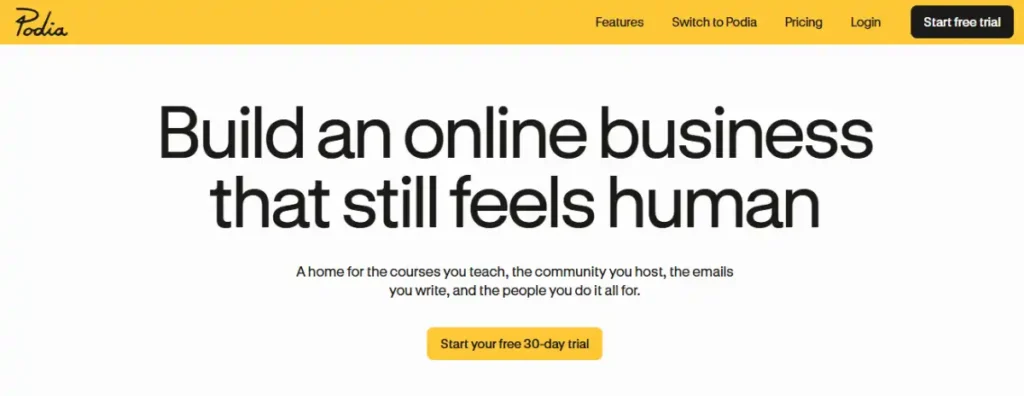
Podia’s pitch is consolidation: digital downloads, online courses, and membership billing all live in one platform with zero transaction fees, avoiding the need to stitch together separate tools for each product type. For a creator selling more than just a single ebook, that consolidation is worth the higher monthly cost compared to a single-purpose platform.
Key Features
Combined downloads, courses, and memberships: One platform covers product types that would otherwise require 2 or 3 separate tools.
Zero transaction fees: No percentage cut on any sale, regardless of product type or plan tier.
Built-in email marketing: Native campaign tools without a separate subscription, unusual among digital product platforms.
Multi-language support: Native support for creators selling to international audiences.
Unlimited products and bandwidth: No artificial caps on catalog size or file delivery volume.
Pricing
Starts at $39/month with zero transaction fees on any plan.
Fee Traps Digital Sellers Fall Into
Ignoring the Real Cost of a Percentage Fee at Scale
A 10% or 5% fee looks small on a $20 ebook. At $10,000 in monthly sales, that’s $1,000 or $500 disappearing every month, often more than a flat-fee competitor’s subscription would cost.
Calculate the real dollar cost at your actual expected volume, not just the percentage rate.
Skipping File Protection Because It’s Just a PDF
Unprotected digital files get shared informally more often than most creators expect. Platforms with PDF stamping, download limits, or license key generation exist specifically to reduce this, and skipping that protection to save setup time costs more in lost sales than it saves.
Choosing a Platform Before Confirming It Supports Your Specific Product Type
Not every platform handles every digital product type equally well. A platform built for ebooks and templates may handle course delivery or membership billing poorly, so confirm your specific product type is a first-class feature, not a workaround, before committing.
Underestimating the Value of Owning Your Customer Relationship
Marketplace-style platforms like Gumroad’s own discovery features are useful for early sales, but they also mean the platform, not you, often owns the customer relationship. A platform with your own branded storefront and email list ownership matters more as the business grows.
How to Choose eCommerce Platform for Digital Products
If you’re testing a single product idea with zero upfront cost, Gumroad gets you to a first sale fastest, with the tradeoff of the highest per-sale fee once volume grows.
If you want lower fees than Gumroad without a full ecommerce platform, Payhip’s tiered structure offers a clearer path to 0% fees as revenue grows.
If your product is already validated and you want predictable monthly costs, Sellfy or SendOwl’s flat-fee subscriptions avoid percentage costs eating into consistent sales.
If you want full brand control and the lowest fees at real scale, Shopify paired with a free digital delivery app is the strongest long-term option.
If you’re selling downloads, courses, and memberships together, Podia’s consolidation avoids stitching together separate tools.
FAQ’s
What’s the cheapest way to sell digital products online?
At low, sporadic sales volume, Gumroad’s free-to-start model with no monthly fee is cheapest in absolute terms, since you only pay when you sell. At consistent, higher volume, a flat-fee platform like Sellfy or Shopify with Shopify Payments becomes cheaper in real dollar terms, since percentage fees compound.
Is Shopify good for selling digital products?
Yes, with a caveat: Shopify isn’t built specifically for digital delivery, so it requires installing a separate app like Digital Downloads (which is free). Once configured, it offers the lowest long-term fees and most branding control of any platform on this list.
How do I protect my digital files from being shared without permission?
Look for platforms offering PDF stamping or watermarking, expiring download links, and license key generation for software. SendOwl and Shopify’s digital delivery apps are among the strongest on this specific dimension.
What’s the difference between Gumroad and Payhip?
Both offer free-to-start plans with no monthly fee, but Payhip charges a lower transaction fee (5% vs. Gumroad’s 10%) and offers a clear path to 0% fees on its $99/month Pro plan, while Gumroad’s 10% rate never changes regardless of volume.
Can I sell both digital and physical products on the same platform?
Yes. Sellfy and Shopify both support mixed digital and physical product catalogs in the same checkout.
Dedicated digital-only platforms like SendOwl and Gumroad are built primarily around file delivery and are a weaker fit for a hybrid catalog.
What’s the difference between this guide and a best platform for print on demand guide?
This guide covers pure digital products delivered as files or access (ebooks, software, courses). Print on demand involves a physical product manufactured and shipped per order, a fundamentally different fulfillment model covered separately.
Final Thoughts
For digital products, the platform decision comes down to fee structure at your real sales volume and how seriously the platform treats file protection. Gumroad and Payhip are the fastest, lowest-cost ways to test an idea, Sellfy and SendOwl offer predictable flat-fee costs once validated, and Shopify or Podia make sense once you want full brand control or need to sell multiple digital product types together.
If you’re weighing whether a free platform can genuinely support your digital product business long-term, the best free ecommerce platform guide covers the real cost tradeoffs behind free claims across the wider platform landscape.