
Food is one of the few product categories where a generic ecommerce platform ranking genuinely misses the point: perishable products need shipping speed guarantees and temperature control, alcohol and certain categories require age verification and state-by-state compliance, and local delivery or pickup logistics work nothing like standard nationwide shipping.
This guide ranks 5 platforms specifically on those food-specific requirements, distinct from a general small business or subscription box guide.
In this guide, you’ll learn which platforms handle perishable shipping and food safety compliance natively versus which require third-party tools to fill the gap, and how local pickup and delivery logistics factor into the platform decision.
Table of Contents
Key Takeaways
- Perishable goods need platforms supporting separate billing and fulfillment scheduling, the ability to charge customers before ingredient sourcing while coordinating delivery timing independently, a capability few general platforms offer natively.
- Shopify’s food-specific app ecosystem covers subscription management (Recharge, Bold, Skio), age verification for alcohol compliance, and shipping date selection for perishables, making it the default choice for serious food and beverage brands.
- Square Online’s tie to Square POS suits food businesses managing both in-person and online sales, curbside pickup, and delivery from one unified system without a full restaurant POS replacement.
- BigCommerce’s native Amazon Grocery and Gourmet Food category integration gives food brands an additional sales channel, though approval requires meeting Amazon’s specific packaging and labeling requirements.
- GrazeCart specializes specifically in perishable, sell-by-weight groceries like meat, dairy, and farm products, handling complex delivery zones and subscriptions that a generic ecommerce platform isn’t built for.
Quick Comparison
| Platform | Starting Price | Food-Specific Strength | Best For |
|---|---|---|---|
| Shopify | $25/month (annual: $23/month) | Deepest food app ecosystem: subscriptions, age verification, shipping dates | Serious food and beverage brands wanting the most complete toolset |
| Square Online | Free, or $49/month (Plus) | Native POS tie for hybrid in-person and online food sales | Local food businesses with a physical counter or kitchen |
| BigCommerce | $39/month | Native Amazon Grocery integration, zero transaction fees | Food brands expanding into marketplace channels |
| WooCommerce | Free plugin + hosting | Flexible deposit and scheduling plugins for made-to-order food | Technical sellers wanting custom fulfillment scheduling |
| GrazeCart | Low three figures per month | Purpose-built for perishable, sell-by-weight groceries | Farms, butchers, and specialty food producers |
The Real Decision Factors for Food Sellers
A general ecommerce ranking treats every product the same. A food business has real, category-specific requirements: perishable products need shipping speed guarantees and often temperature-controlled packaging, and the platform ideally supports charging customers before ingredients are sourced while coordinating delivery timing separately, since food production and shipping schedules rarely align neatly.
The first real test is whether the platform natively supports shipping date selection, letting customers choose a delivery window appropriate for perishable goods, rather than shipping immediately regardless of transit time or temperature risk.
The second test is compliance: alcohol and certain food categories require age verification and state-by-state regulatory handling that a generic platform doesn’t address without a dedicated app.
We evaluated each platform on native or app-based perishable shipping support, food safety and compliance tooling, and local pickup and delivery logistics handling, cross-referenced against the best platform for subscription boxes guide for food brands running a recurring box model alongside one-time purchases.
Shopify: Best for Serious Food and Beverage Brands

Shopify’s food-specific app ecosystem is the most complete of any platform here: subscription management through Recharge, Bold, or Skio for recurring food box deliveries, age verification apps for alcohol and restricted product compliance, shipping date selection for perishables, and nutritional information display through product metafields.
Key Features
Shipping date selection: Customers choose delivery windows appropriate for perishable items, reducing spoilage risk in transit.
Age verification apps: Native app support for alcohol and restricted product compliance, handling state-by-state variation.
Subscription app ecosystem: Recharge, Bold, and Skio all integrate for recurring food and beverage box deliveries with flexible billing cycles.
Nutritional information display: Product metafields support detailed nutritional and ingredient data required for food compliance.
Multi-location inventory tracking: Useful for food businesses with warehouse or commercial kitchen locations tracked separately.
Pros
- The most complete food-specific app ecosystem of any platform, covering subscriptions, compliance, and perishable shipping logistics in one system.
- Strong native marketing tools (email, abandoned cart recovery, social selling) support the customer retention that subscription food brands depend on.
Cons
- Every food-specific capability, age verification, subscriptions, shipping date selection, depends on a third-party app, adding both cost and integration complexity to manage.
- The 2% transaction fee on the Basic plan applies unless using Shopify Payments, worth checking against your specific payment setup.
Who It’s Best For
Food and beverage brands ready to build a serious, scalable operation with subscription revenue, alcohol compliance needs, or perishable shipping requirements.
Pricing
Basic plan is $25/month billed monthly or $23/month billed annually, plus separate costs for food-specific apps (subscriptions, age verification).
Square Online: Best for Hybrid In-Person and Online Food Sales
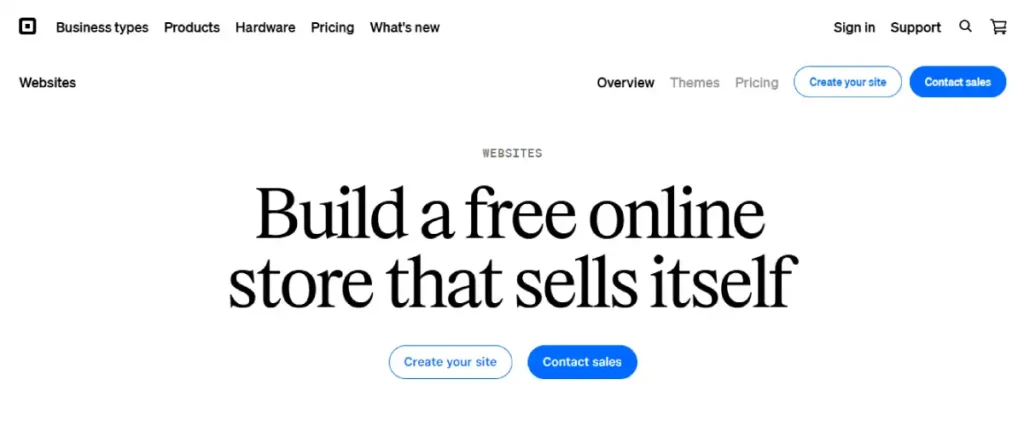
For a food business already running a physical counter, café, or farm stand, Square Online’s native tie to Square POS unifies in-person and online sales, curbside pickup, and delivery scheduling from one system, without needing a full restaurant POS replacement or a disconnected second platform.
Key Features
Native POS integration: Inventory and sales sync automatically between in-person and online channels, avoiding a double-entry problem.
Curbside pickup and delivery scheduling: Set hours of operation, preparation times, and delivery zones directly from the Square app.
Mobile order management: Manage incoming orders from a phone, useful for a small food business without a dedicated back-office setup.
Automatic tax calculator: Handles food-specific tax variation without manual configuration.
Pros
- The strongest tie between in-person and online food sales of any platform here, avoiding disconnected systems for a hybrid business.
- Order management from a mobile app suits a small food business team without a dedicated computer-based back office.
Cons
- The free plan’s 3.3% online transaction rate is higher than the platform’s own paid tiers, worth calculating against expected online food sales volume.
- Less food-specific app depth (subscriptions, age verification) compared to Shopify’s more extensive ecosystem.
Who It’s Best For
Food businesses with a physical counter, café, or farm stand wanting one unified system for in-person and online sales without a full restaurant POS replacement.
Pricing
Free plan available with no monthly fee (3.3% + $0.30 per online transaction). Plus plan is $49/month per location (2.9% + $0.30 online).
BigCommerce: Best for Expanding into Marketplace Channels
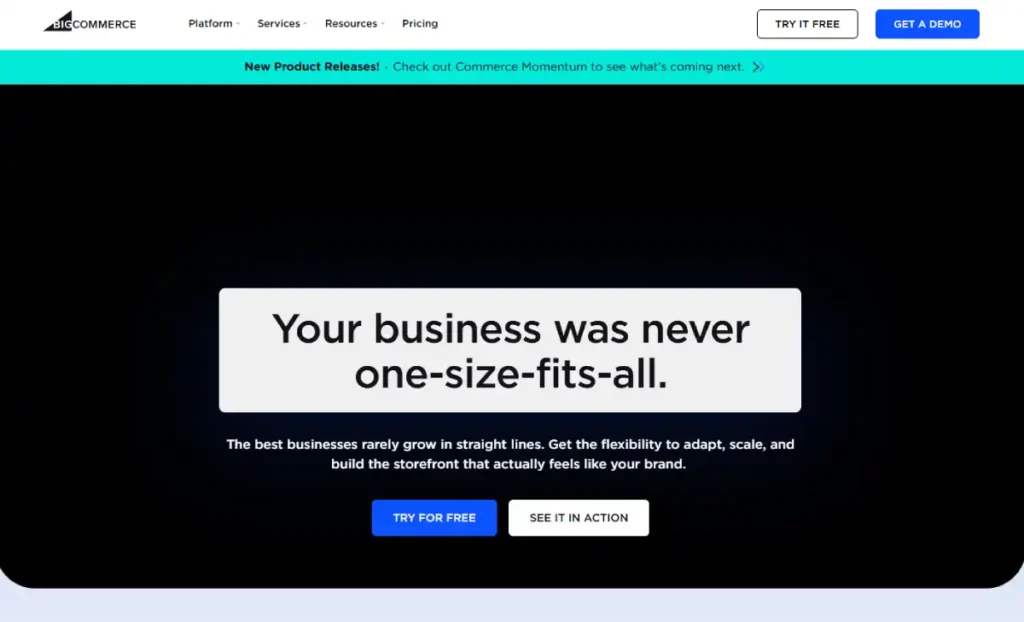
BigCommerce’s native Amazon integration makes it particularly easy for food brands to expand into Amazon’s Grocery and Gourmet Food category, a real additional sales channel once a food brand has its packaging and labeling requirements in order, combined with zero transaction fees that preserve margin on typically thin food retail markups.
Our full BigCommerce review breaks down its plan tiers and features further.
Key Features
Native Amazon Grocery integration: Streamlined path to listing in Amazon’s Grocery and Gourmet Food category once approved.
Zero transaction fees on every plan: A direct margin advantage on food products, where retail markups are often thinner than other categories.
Native multi-channel selling: Extends beyond Amazon to other marketplaces and social channels from one backend.
Advanced product filtering: Useful for food brands with a varied catalog needing clear categorization by dietary restriction, flavor, or type.
Pros
- Native Amazon Grocery integration gives food brands a proven additional sales channel without third-party middleware.
- Zero transaction fees preserve more margin on food products, where markups typically run thinner than other retail categories.
Cons
- Amazon Grocery approval requires meeting specific packaging and labeling requirements, a real compliance step before the channel becomes available.
- Less native subscription and perishable-shipping-specific tooling than Shopify’s more food-focused app ecosystem.
Who It’s Best For
Food brands wanting to expand beyond a direct-to-consumer website into Amazon’s Grocery and Gourmet Food marketplace category.
Pricing
Standard plan is $39/month with no transaction fees, capping at $50K in annual sales before requiring an upgrade to Plus ($105/month).
WooCommerce: Best for Custom Fulfillment Scheduling
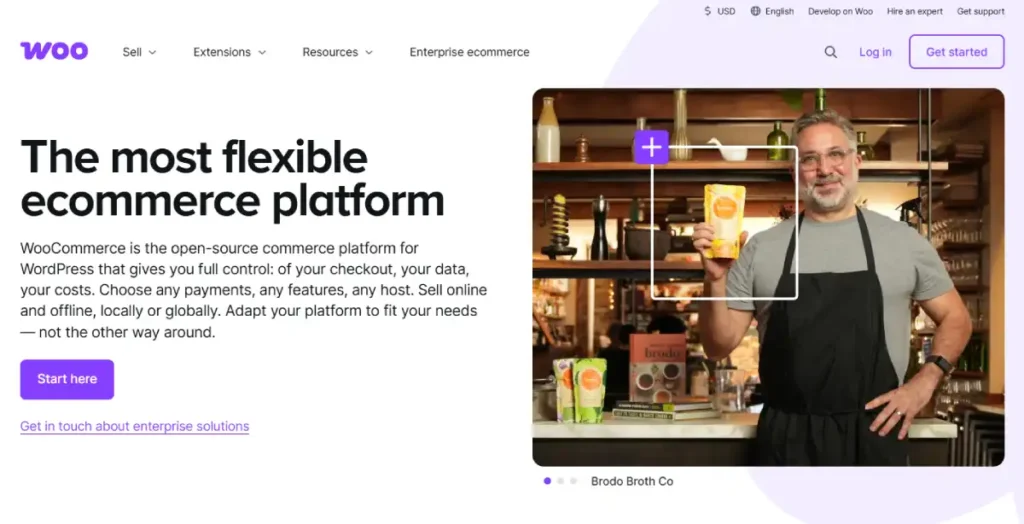
WooCommerce’s plugin flexibility, particularly WooCommerce Deposits, lets a technical food business configure custom billing and fulfillment scheduling specific to made-to-order or perishable products, charging a deposit at order time with the balance due closer to the actual fulfillment date.
Key Features
WooCommerce Deposits plugin: Configure any deposit structure needed for made-to-order or pre-order food products.
Custom fulfillment scheduling: Build a workflow specific to your exact perishable production and shipping timeline through plugins and development.
No platform transaction fees: Only standard payment gateway fees apply, preserving margin on thin food retail markups.
Strong content and SEO tools: Useful for food brands building an audience around recipes, sourcing stories, or ingredient transparency.
Pricing
The core plugin is free. Realistic total cost, including hosting, WooCommerce Deposits, and other food-specific plugins, runs $300 to $800/year for a basic store.
GrazeCart: Best for Perishable, Sell-by-Weight Groceries

GrazeCart specializes specifically in perishable, often premium groceries, meat, dairy, farm products, handling sell-by-weight items, complex delivery zones, and subscriptions that a generic ecommerce platform isn’t built for. For a farm, butcher, or specialty food producer, that purpose-built specialization removes workarounds a general platform would otherwise require.
Key Features
Sell-by-weight product handling: Native support for variable-weight items common in meat, cheese, and farm product sales.
Complex delivery zone management: Built specifically for the local, often zone-restricted delivery patterns common in farm and specialty food sales.
Native subscription support: CSA-style recurring box subscriptions built for perishable products, not adapted from a general subscription app.
Food-safety-aware fulfillment tools: Designed around the operational realities of variable-weight, perishable inventory rather than fixed-SKU retail goods.
Pricing
Plans typically start in the low three figures per month, scaling with features and order volume; contact GrazeCart directly for current pricing.
Mistakes That Risk Spoilage or Compliance
Treating Perishable Shipping the Same as Standard Retail Shipping
A platform or shipping setup without shipping date selection and temperature-aware packaging guidance risks real spoilage and customer complaints. Confirm your shortlisted platform supports scheduling delivery windows appropriate for perishable goods, not just standard shipping speed options.
Skipping Age Verification for Alcohol or Restricted Products
Alcohol and certain restricted food categories require age verification and state-by-state compliance handling. A platform or app that doesn’t address this creates real legal and regulatory risk, not just a missing feature.
Assuming a Generic Platform Handles Sell-by-Weight Products Well
Meat, cheese, and other variable-weight products don’t fit neatly into fixed-price, fixed-SKU retail templates. A specialized platform like GrazeCart, or significant custom configuration on a general platform, is often necessary to handle this correctly.
Underestimating the Compliance Requirements for Amazon Grocery Listings
Amazon’s Grocery and Gourmet Food category has specific packaging and labeling requirements beyond a standard product listing. Confirm your food business meets these requirements before assuming BigCommerce’s native integration makes the channel immediately available.
How to Choose an eCommerce Platform for a Food Business
If you’re building a serious, scalable food and beverage brand with subscription revenue or alcohol compliance needs, Shopify’s food-specific app ecosystem is the most complete option.
If you already run a physical counter or kitchen and want in-person and online sales unified in one system, Square Online avoids running two disconnected systems.
If you want to expand into Amazon’s Grocery and Gourmet Food marketplace alongside your own store, BigCommerce’s native integration and zero transaction fees support that expansion.
If you need custom deposit and fulfillment scheduling for made-to-order or pre-order food products, WooCommerce’s plugin flexibility offers that control.
If you specifically sell perishable, sell-by-weight products like meat, dairy, or farm goods, GrazeCart’s purpose-built tools remove workarounds a general platform would require.
FAQ’s
What’s the best platform for a food subscription box business?
Shopify paired with a subscription app like Recharge is the strongest option specifically for food subscription boxes, with flexible billing cycles, build-your-own-box functionality, and skip-and-pause self-service tools designed for recurring food deliveries.
Can I sell alcohol online through these platforms?
Yes, but it requires an age verification app and awareness of state-by-state shipping regulations, which vary significantly. Shopify has the most mature app ecosystem for handling this compliance requirement, though the legal responsibility for compliance remains with the seller regardless of platform.
How do I handle shipping for perishable food products?
Look for a platform or app supporting shipping date selection so customers can choose appropriate delivery windows, combined with insulated packaging and expedited shipping carriers. Our best shipping software for ecommerce guide covers the specific tools that handle temperature-sensitive and time-critical shipments well. Some food brands set shipping restrictions during hot summer months if temperature control can’t be guaranteed.
What’s the difference between this guide and a best platform for subscription boxes guide?
This guide covers food-specific requirements: perishable shipping, food safety compliance, and local delivery logistics. A subscription box guide covers the broader recurring-billing mechanics that apply across any product category, food or otherwise.
Do I need a specialized platform like GrazeCart, or can Shopify handle my food business?
It depends on your product type. Shopify handles most packaged, shelf-stable, or standard food products well with its app ecosystem.
GrazeCart’s specialization becomes valuable specifically for sell-by-weight, perishable products like meat and dairy, where variable pricing and complex delivery zones are the norm, not the exception.
Can I sell food on Etsy?
Etsy allows shelf-stable, handmade, or novelty food items like jams, cookies, and spice blends, but generally prohibits perishable or temperature-sensitive items.
It’s a reasonable entry point for a part-time seller with shelf-stable products, but not built for a serious perishable food business.
Final Thoughts
For a food business, the platform decision comes down to how well perishable shipping, compliance, and local delivery logistics are actually supported, not just whether the platform can technically process a food order.
Shopify offers the most complete food-specific app ecosystem for serious brands, Square Online suits hybrid in-person and online sellers, and GrazeCart’s specialization becomes essential once you’re selling genuinely perishable, sell-by-weight products.
If you’re running a food subscription box or want to understand the broader recurring-billing mechanics available, the best platform for subscription boxes guide and the Shopify’s transaction fees breakdown are good next stops.