
A subscription box business lives or dies on recurring billing mechanics that a one-time-purchase platform ranking never has to consider: dunning management for failed payments, self-service skip and swap portals, and churn tools, since monthly churn on a box commonly runs 10 to 15%, with 44% of all cancellations happening in the first 90 days.
This guide ranks 5 platforms specifically for that recurring-revenue mechanic, distinct from a general small business or wholesale decision.
In this guide, you’ll learn the real tradeoff between marketplace-native platforms and building your own store with a subscription app, what dunning and self-service tools actually prevent lost revenue, and which platform fits your stage of growth.
Key Takeaways
- Cratejoy brings built-in marketplace discovery for a launch-stage box with no existing audience, but takes a real referral fee and means the marketplace, not you, partly owns the customer relationship.
- Shopify plus a subscription app (Recharge, Appstle, or Seal) is where most growing subscription brands land, since it means owning your store and customer data long-term rather than renting space on a marketplace.
- Recharge alone powers over 20,000 subscription businesses on Shopify, with deep checkout integration and a branded self-service portal, but its pricing runs steeper than lighter alternatives like Seal or Appstle.
- Subbly is the strongest pure subscription-box builder outside Shopify, with build-a-box and subscriber surveys native rather than retrofitted, at the cost of a smaller integration ecosystem.
- Monthly churn on a subscription box commonly runs 10 to 15%, with 44% of cancellations happening in the first 90 days, making self-service skip and swap tools a retention necessity, not a nice-to-have.
Quick Comparison
| Platform | Starting Price | Recurring Billing Model | Best For |
|---|---|---|---|
| Cratejoy | Marketplace tier ~$24.99/mo + 1.25% + $0.10, or from $59/mo for full site | Native, subscription-first | Launch-stage boxes with no existing audience |
| Shopify + Recharge | $25/mo (Shopify) + Recharge (free to $250K billed, then 0.75%; paid plans from $599/mo) | Deep, checkout-integrated | High-volume brands wanting every subscription feature |
| Shopify + Seal or Appstle | $25/mo (Shopify) + affordable app tier | Simple, flat-priced | Growing brands wanting predictable subscription app cost |
| Subbly | Custom pricing, subscription-first builder | Native, build-a-box and surveys built in | Subscription-first brands wanting a dedicated builder outside Shopify |
| WooCommerce + Subscriptions | Free plugin + hosting + Woo Subscriptions extension | Fully customizable via plugin | Technical teams wanting full self-hosted control |
The Real Decision Factors for Recurring Revenue
A general ecommerce platform ranking assumes a one-time purchase. A subscription box’s real evaluation centers on the mechanics of recurring revenue: does the platform handle flexible billing intervals natively, does it retry a failed payment automatically before canceling a subscriber (dunning management), and can a subscriber skip, swap, or pause without contacting support.
The first real test is churn infrastructure. With subscription box churn commonly running 10 to 15% monthly, a self-service portal that lets subscribers manage their own subscription reduces both support load and involuntary churn from failed payments that go unrecovered.
The second test is the marketplace-versus-owned-store tradeoff: a platform like Cratejoy brings built-in discovery traffic for a launch-stage box, at the cost of a referral fee and partial ownership of the customer relationship, similar to the Etsy-versus-Shopify tradeoff handmade sellers face.
We evaluated each platform on native recurring billing depth, dunning and self-service portal tools, and the real cost of marketplace fees versus platform-plus-app subscription costs at realistic subscriber volumes, cross-referenced against our Shopify review and WooCommerce review for the underlying platform decision beneath the subscription app choice.
Cratejoy: Best for Launch-Stage Boxes with No Existing Audience
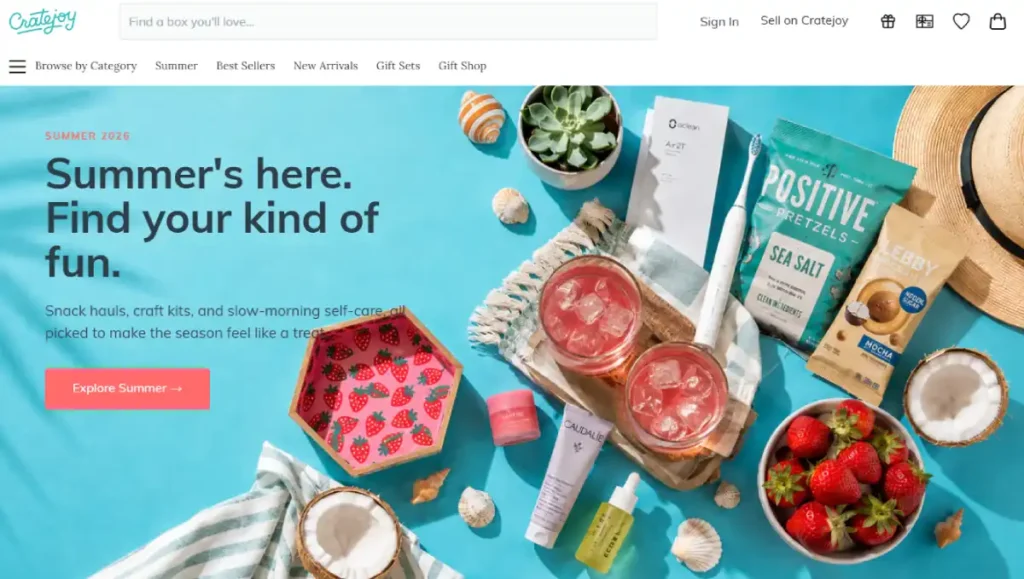
Cratejoy is one of the only platforms built specifically as a subscription-first marketplace, meaning customers arrive already searching for boxes rather than needing to be found through your own marketing. For a launch-stage subscription box with no existing audience, that built-in discovery removes the hardest early problem, at the real cost of a referral fee and a customer relationship the marketplace partly owns.
Key Features
Subscription-first marketplace discovery: Customers arrive with buying intent already established, unlike building traffic from zero on an owned store.
Native recurring billing and renewal management: Handles subscription mechanics as core functionality, not an add-on.
Advanced rebilling options: Supports weekly, biweekly, bimonthly, quarterly, and custom billing cycles beyond the default monthly schedule.
Built-in customer communications: Automated renewal and billing notifications without a separate email tool.
Integrated shipping tools: Connects with ShipStation, Pirate Ship, and other fulfillment tools for the physical box logistics.
Pros
- Genuine built-in discovery traffic removes the hardest early-stage problem for a box with no existing audience.
- Subscription mechanics are native, not retrofitted, meaning fewer app dependencies than adding subscription logic to a general platform.
Cons
- Marketplace transaction fees are a real, ongoing cost that compounds as order volume grows, unlike a flat platform-plus-app cost structure.
- The marketplace, not you, partly owns the customer relationship, similar to the tradeoff handmade sellers face choosing between Etsy and an owned store.
Who It’s Best For
Launch-stage subscription boxes with no existing audience who need discovery traffic more than full brand ownership, at least initially.
Pricing
Marketplace-only tier is $24.99/month plus 1.25% + $0.10 per transaction. Full site and design starts at $59/month plus the same transaction fee.
Shopify + Recharge: Best for High-Volume Brands Wanting Every Feature
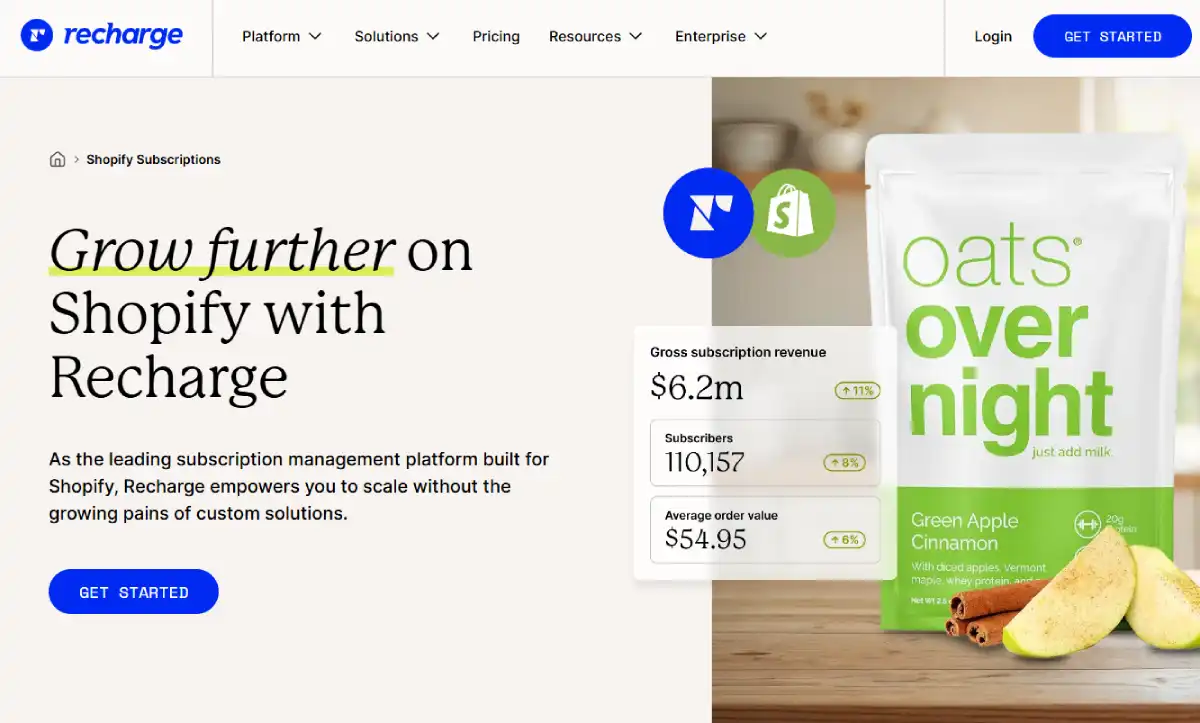
Recharge powers over 20,000 subscription businesses on Shopify, with deep checkout integration that keeps the subscriber experience seamless and a branded self-service portal letting customers skip, swap, or update payment details without contacting support. For a high-volume brand where every subscription feature needs to work reliably, Recharge’s depth is the most proven option on this list.
Key Features
Deep Shopify checkout integration: Subscription billing feels native to the store rather than a bolted-on redirect.
Branded self-service portal: Subscribers manage skips, swaps, and payment updates without generating a support ticket, critical as subscriber count grows.
Dunning management: Automatically retries failed payments before canceling a subscriber, recovering revenue that would otherwise silently churn.
Mixed cart support: Combines subscription and one-time purchase items in a single checkout.
Deep marketing integration: Native data sync with Klaviyo for win-back campaigns, tier upsells, and referral programs based on subscription status.
Pros
- The most proven, deeply integrated subscription app on Shopify, powering tens of thousands of businesses at real scale.
- Dunning management and self-service tools directly address the 10-15% monthly churn rate subscription boxes commonly face.
Cons
- Pricing runs steeper than lighter alternatives like Seal or Appstle, a real cost difference worth weighing against the depth of features actually needed.
- Individual billing cycle customization can be complex to configure correctly for a first-time subscription merchant.
Who It’s Best For
High-volume subscription brands on Shopify wanting the deepest, most proven subscription billing integration available.
Pricing
Shopify Basic is $25/month. Recharge is free for the first $250,000 in cumulative billing, then 0.75% afterward; paid plans start at $599/month for higher-volume needs.
Shopify + Seal or Appstle: Best for Predictable Subscription App Cost
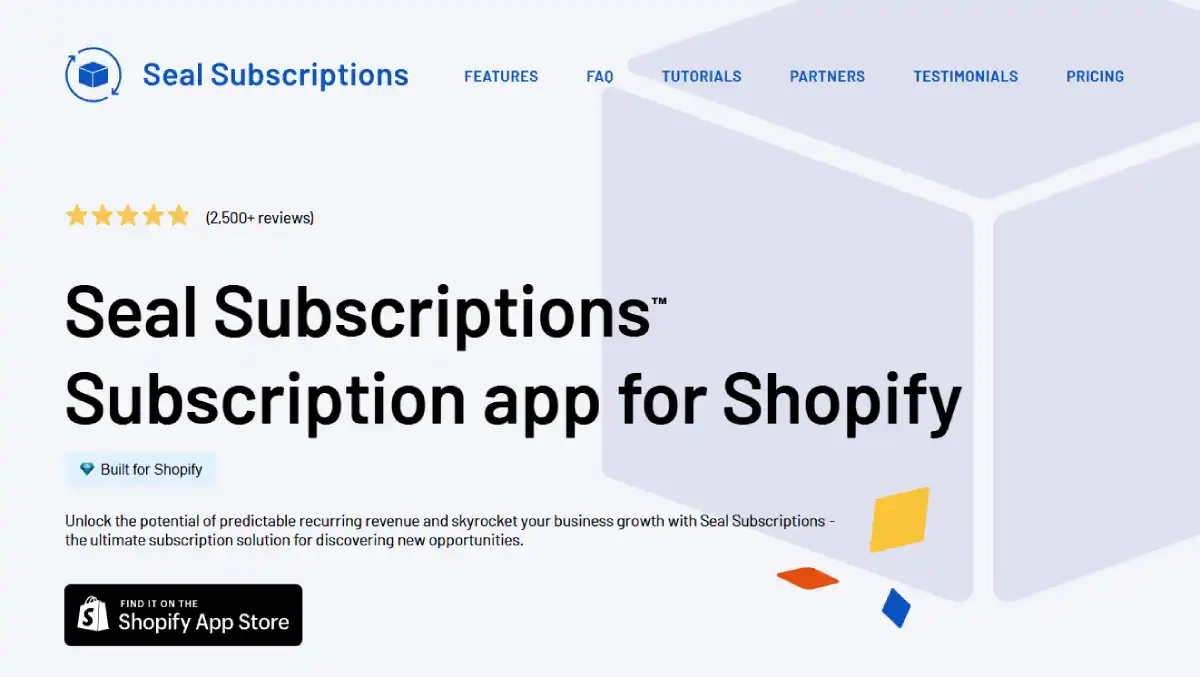
For a growing subscription brand that doesn’t yet need Recharge’s full depth, Seal Subscriptions and Appstle offer simple, flat-priced recurring billing on Shopify, including build-a-box functionality on affordable tiers, without the steeper cost curve of a high-volume-focused app.
Key Features
Flat, predictable pricing: Avoids the percentage-of-revenue cost structure that makes Recharge more expensive at certain volumes.
Build-a-box functionality: Appstle in particular supports customer-customized box building on accessible pricing tiers.
Core recurring billing mechanics: Skip, swap, pause, and cancel functionality covered without Recharge’s full feature depth.
Simple setup: A more straightforward configuration process for a first-time subscription merchant.
Pricing
Seal Subscriptions starts at $5.95/month with no revenue-share fee. Appstle offers tiered pricing with build-a-box included on accessible plans.
Subbly: Best for Subscription-First Brands Wanting a Dedicated Builder
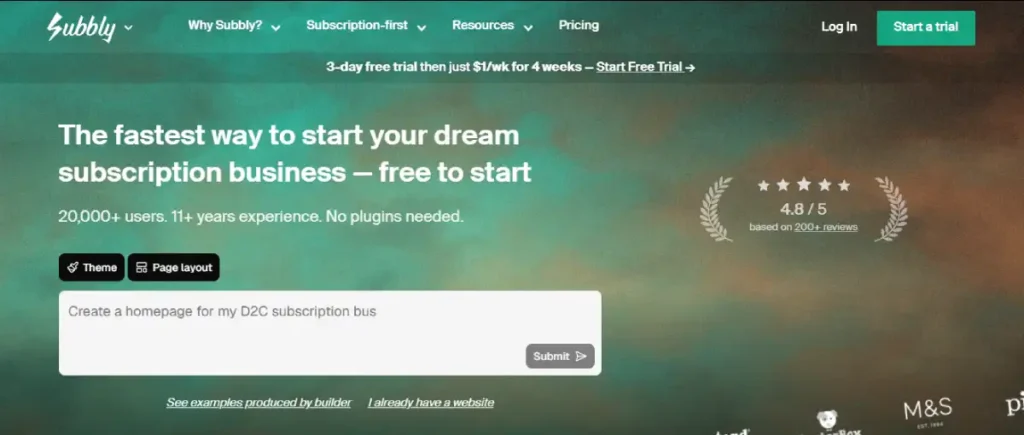
Subbly is built entirely around the subscription box model rather than adding it to a general-purpose platform, with build-a-box and subscriber surveys native rather than retrofitted.
It loses to Cratejoy only on built-in marketplace discovery and to Shopify only on the breadth of its integration ecosystem, making it the strongest pure subscription-box builder for a brand that wants full ownership without living on Shopify.
Key Features
Subscription-first design throughout: Every feature assumes recurring billing, avoiding the retrofitted feel of adding subscription logic to a general platform.
Native build-a-box and surveys: Let customers customize box contents or answer preference surveys without a separate app.
Flexible billing cycles: Weekly, monthly, quarterly, and prepaid billing all supported natively.
Full brand ownership: Unlike Cratejoy, no marketplace relationship diluting customer ownership.
Cons
- A smaller integration ecosystem than Shopify’s app marketplace, a real constraint if you need a specific third-party tool.
- Single-vendor lock-in means migrating away from Subbly later requires real rebuilding work.
Who It’s Best For
Subscription-first brands wanting a purpose-built box platform with full customer ownership, without managing Shopify plus a separate subscription app.
Pricing
Custom pricing based on plan tier; contact Subbly directly for current rates.
WooCommerce + Subscriptions: Best for Technical Teams Wanting Full Control
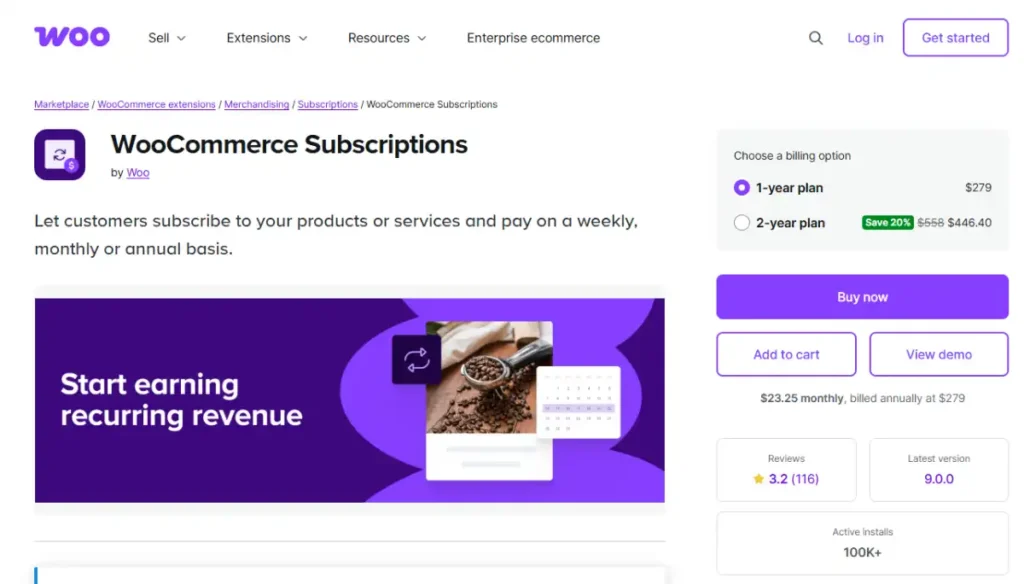
WooCommerce Subscriptions extends WordPress into a fully customizable recurring billing system, giving a technical team complete control over billing logic, subscriber communications, and box customization workflows that a hosted platform’s fixed template structure doesn’t allow.
Key Features
Full customization of billing logic: Build a subscription workflow specific to your exact box model through custom development.
No platform transaction fees: Only standard payment gateway fees apply, regardless of subscriber count.
Complete data ownership: Full control over subscriber and billing data without a third-party app dependency.
Flexible integration options: Connect any tool via WordPress’s broader plugin ecosystem.
Pricing
Core plugin is free. Woo Subscriptions extension plus hosting and development runs $800 to $3,000+/year depending on complexity.
Churn-Causing Mistakes to Avoid
Underestimating Churn as a Platform Feature Requirement
With monthly churn commonly running 10 to 15% and 44% of cancellations happening in the first 90 days, a platform without dunning management and self-service skip/swap tools loses more revenue to preventable churn than most merchants budget for upfront.
Choosing Cratejoy Without Calculating the Real Referral Fee Cost
Cratejoy’s marketplace discovery is valuable at launch, but the 1.25% plus $0.10 transaction fee compounds as order volume grows. Calculate whether that fee still makes sense once you have an established subscriber base, or whether migrating to an owned store makes more financial sense at that point.
Adding Subscription Billing to a Platform Not Built to Support It
Squarespace supports basic recurring billing natively, but lacks advanced features like skip deliveries or build-a-box. Confirm your specific subscription mechanics are genuinely supported, not just whether it can bill recurring payments, before committing.
Planning for the Platform Without Planning for Support Load
A subscription platform runs the billing. It doesn’t run the customer support phone line.
Budget for the real, ongoing support load of managing skips, swaps, and cancellation requests separately from the platform decision itself.
How to Choose eCommerce Platform for a Subscription Box
If you’re launching with no existing audience and want built-in discovery traffic, Cratejoy’s marketplace model removes the hardest early problem, at the cost of a referral fee.
If you want to own your store and customer relationship long-term and are willing to add a subscription app, Shopify plus Recharge, Appstle, or Seal is where most growing brands land.
If your subscriber volume is high and you need every subscription feature working reliably, Recharge’s depth is the most proven option, despite its steeper cost.
If you want a dedicated subscription-first builder without living on Shopify, Subbly’s native build-a-box and survey tools are purpose-built for exactly this model.
If you have technical resources and want full control over a custom billing workflow, WooCommerce Subscriptions offers that flexibility.
FAQ’s
Should I start my subscription box on Cratejoy or Shopify?
Cratejoy is faster to launch and brings marketplace discovery traffic, but takes a real referral fee and partly owns the customer relationship. Shopify plus a subscription app requires more setup but lets you own your store and customer data long-term.
Most brands with an existing audience choose Shopify; most launching from zero start with Cratejoy.
Do I need a separate app for subscription billing on Shopify?
Yes. Shopify doesn’t handle recurring box logic natively, so you add an app like Recharge, Appstle, Skio, or Seal Subscriptions depending on your feature needs and budget.
What’s the real cost difference between Recharge and Seal Subscriptions?
Recharge is free for the first $250,000 in cumulative billing, then 0.75% afterward, with paid plans starting at $599/month for higher-volume needs. Seal Subscriptions starts at a flat $5.95/month with no revenue-share fee, a meaningfully cheaper option for a growing but not yet high-volume subscription business.
How much does subscription box churn really cost?
Monthly churn on a subscription box commonly runs 10 to 15%, with 44% of all cancellations happening in the first 90 days. A platform with dunning management (automatic retry of failed payments) and self-service skip/swap tools directly reduces both preventable churn and the support load of managing cancellations manually.
Can I sell both subscriptions and one-time products on the same platform?
Yes. Shopify and BigCommerce both support mixed carts combining subscription and one-time purchase items, and Recharge specifically supports this combination natively within Shopify’s checkout.
What’s the difference between this guide and the wholesale guide?
This guide covers direct-to-consumer recurring box subscriptions. A wholesale guide covers a brand adding a bulk B2B channel, a fundamentally different buyer relationship and billing structure than a consumer subscription box.
Final Thoughts
For a subscription box, the platform decision comes down to the marketplace-versus-owned-store tradeoff, the same fundamental choice handmade sellers face with Etsy, plus the depth of recurring billing and churn management tools you need.
Cratejoy and Subbly serve the subscription-first, marketplace-or-standalone decision directly, while Shopify plus a subscription app remains where most growing brands land once they want full ownership of their store and customer data.
If you’re weighing Shopify against WooCommerce for the underlying platform decision, or want to understand the broader marketplace-versus-owned-store tradeoff, our Shopify review and WooCommerce review, alongside the best platform for handmade sellers guide, cover that same underlying tradeoff from a different angle.