
For a maker selling physical, hand-produced goods, the platform decision isn’t really about features. It’s a tradeoff between Etsy’s built-in buyer traffic and the brand ownership and lower long-term fees of running your own store.
Most guides frame this as Etsy vs. everything else, but the real answer for most handmade sellers is closer to running both at once.
This guide ranks 5 platforms specifically on that tradeoff, distinct from a general small-business platform decision, since a handmade seller’s production capacity and marketplace discovery needs are a different filter than integration with existing operations.
In this guide, you’ll learn the real cost of Etsy’s fee stack, when an owned store starts making more financial sense, and which platforms are actually built for makers rather than adapted from a generic template.
Key Takeaways
- Etsy’s real fee stack runs 12-20% of every sale once you add the 6.5% transaction fee, $0.20 listing fee, 3% plus $0.25 payment processing, and mandatory Offsite Ads (12-15%) for sellers over $10,000 in annual revenue.
- Most successful handmade sellers don’t pick one platform. They use Etsy for discovery traffic and an owned store like Shopify or Big Cartel for brand-building and repeat customers.
- Big Cartel’s free plan (5 products, no transaction fees) is a genuinely free way to test whether an owned store converts before committing further.
- Shopify’s 2.9% plus 30 cent transaction cost (via Shopify Payments) is meaningfully lower than Etsy’s combined fee stack once you’re driving your own traffic, but that traffic-driving responsibility is the real tradeoff.
- Squarespace’s design quality suits handmade sellers whose product presentation depends heavily on lifestyle photography, more than raw catalog scale.
Quick Comparison
| Platform | Starting Price | Fee Structure | Best For |
|---|---|---|---|
| Etsy | Free to list | 6.5% + $0.20 listing + processing + Offsite Ads | Built-in buyer discovery for new makers |
| Shopify | $25/month (annual: $23/month) | 2% (waived with Shopify Payments) | Owning your brand once you can drive traffic |
| Big Cartel | Free (5 products), ~$9.99+/month | 0% transaction fees | Testing an owned store at zero risk |
| Squarespace | $36/month (Basic Commerce) | 0% via Squarespace Payments | Lifestyle photography-driven presentation |
| Wix | $29/month | 0% via Wix Payments | Small, curated catalogs with visual branding |
The Real Decision Factors for Makers
A handmade seller’s real constraint is usually production capacity, not platform features. That changes the evaluation: the question isn’t which platform has the most apps, it’s which platform gets your specific, story-driven products in front of buyers who are already looking for something like it, at a fee structure that doesn’t erode your margin on a labor-intensive product.
Etsy’s advantage is real and specific: buyers on Etsy are actively searching for handmade goods, which removes the customer-discovery problem that plagues a brand-new owned store. The tradeoff is a fee stack that, once you add every component, commonly runs 12-20% of each sale, and a customer relationship that Etsy owns, not you.
We evaluated each platform based on handmade seller fees, audience-building requirements, and product presentation tools for handmade goods.
We also used our best platform for artists guide to separate handmade selling needs from adjacent digital and print-art use cases.
Etsy: Best for Built-In Buyer Discovery

Etsy remains the largest dedicated marketplace for handmade goods, with buyers actively searching for products like yours rather than needing to be found through your own marketing.
For a maker without an existing audience, that discovery advantage genuinely removes the hardest early problem: getting your first sales without spending on ads or building an audience from zero.
Key Features
Built-in buyer intent: Shoppers arrive already searching for handmade goods, unlike an owned store that requires driving its own traffic.
Low setup friction: A listing can go live in minutes, with no separate website, hosting, or design work required.
Integrated payment processing: Etsy Payments handles checkout without a separate gateway setup.
Seller protection policies: Established dispute resolution processes for buyer and seller issues.
Renewable listings: Listings can be set to auto-renew, keeping products discoverable without manual relisting.
Pros
- The strongest built-in buyer discovery of any platform here, particularly valuable for a maker with no existing audience.
- Minimal upfront cost or setup time compared to building and marketing an owned store from scratch.
Cons
- The real combined fee stack, 6.5% transaction fee, $0.20 listing fee, 3% plus $0.25 processing, and mandatory Offsite Ads at 12-15% for sellers over $10K annually, commonly totals 12-20% of every sale.
- Etsy, not you, owns the customer relationship and email list, limiting your ability to market directly to past buyers.
Who It’s Best For
New makers without an existing audience who need buyer discovery more than brand control, particularly as a starting or supplementary channel.
Pricing
Free to list. $0.20 listing fee per item, 6.5% transaction fee, 3% + $0.25 payment processing, plus mandatory Offsite Ads (12-15%) for sellers exceeding $10,000 in annual sales.
Shopify: Best for Owning Your Brand Once You Can Drive Traffic
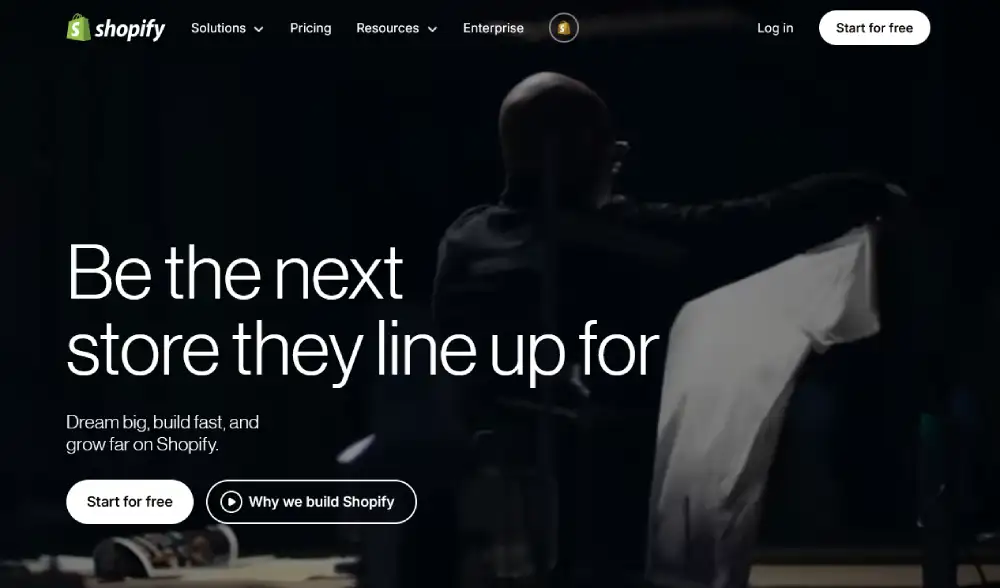
Once a handmade seller has some existing audience, whether from Instagram, word of mouth, or prior Etsy sales, Shopify’s lower real transaction cost and full brand ownership start to outweigh Etsy’s discovery advantage. Many established makers run Shopify as their brand home while keeping an Etsy shop open as a supplementary discovery channel.
Key Features
Full brand and design control: Complete storefront customization, unlike Etsy’s standardized listing template shared across sellers.
Customer data ownership: Direct access to buyer emails for repeat-purchase marketing, unlike Etsy’s platform-owned relationship.
Etsy import app: Migrate existing Etsy listings directly rather than manually recreating each product page.
Lower real transaction cost: 2.9% plus 30 cents via Shopify Payments, meaningfully below Etsy’s full combined fee stack.
Storytelling-focused themes: Craft and similar themes are built specifically for maker narratives and process photography.
Pros
- Lower real transaction cost than Etsy’s full fee stack once you’re driving meaningful traffic yourself.
- Full ownership of the customer relationship and brand presentation, unlike a marketplace listing.
Cons
- No built-in buyer discovery, meaning the responsibility for driving traffic falls entirely on you, which can mean a slow first 6 to 12 months without an existing audience.
- The $25/month cost applies regardless of sales volume, unlike Etsy’s pay-per-sale model that carries no cost when nothing sells.
Who It’s Best For
Makers with some existing audience, whether social media followers or prior marketplace sales history, ready to build a brand outside a marketplace’s constraints.
Pricing
Basic plan is $25/month billed monthly or $23/month billed annually, with a 2.9% + $0.30 transaction fee via Shopify Payments.
Big Cartel: Best for Testing an Owned Store at Zero Risk
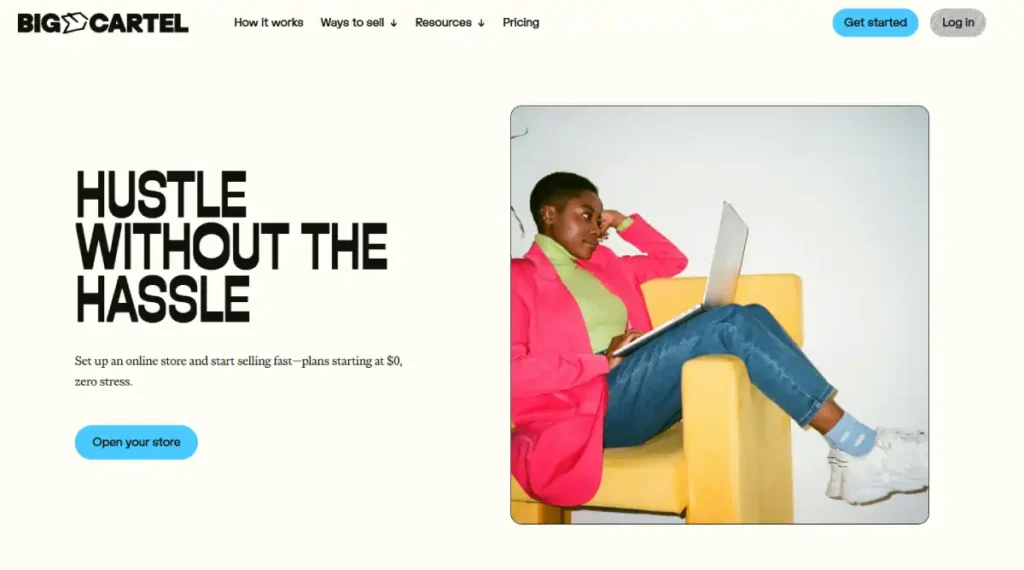
Big Cartel’s free plan supports up to 5 products with no transaction fees, making it a genuinely no-cost way for a maker to test whether an owned store converts before committing to Shopify’s monthly fee.
It’s built specifically for artists and makers rather than adapted from a general-purpose template, which shows in its minimalist, gallery-like default presentation.
Our Big Cartel review covers its plans and features in more depth.
Key Features
Free plan for up to 5 products: A real zero-cost way to test an owned store’s conversion before paying anything.
No transaction fees on any plan: Only standard payment gateway fees apply, keeping costs predictable as sales grow.
Artist-focused templates: Minimalist, gallery-style defaults built specifically for creative and handmade sellers, not adapted from a general retail template.
Simple, fast setup: One of the quickest platforms here to get a professional-looking store live.
Custom domain support: Even on paid plans, connect your own domain for a fully branded presence.
Pros
- A genuinely free way to test an owned store’s real conversion rate before committing to a paid platform.
- No transaction fees on any plan, keeping costs simple and predictable.
Cons
- The 5-product free tier cap is restrictive quickly for a maker with more than a small test catalog.
- The audience base is far smaller than Etsy’s, meaning you’re still responsible for all your own traffic.
Who It’s Best For
Makers wanting to test whether an owned store can convert before committing further, or those with a small, tightly curated product line.
Pricing
Free for up to 5 products. Paid plans start around $9.99 to $15/month depending on current tier, with no transaction fees on any plan.
Squarespace: Best for Lifestyle Photography-Driven Presentation
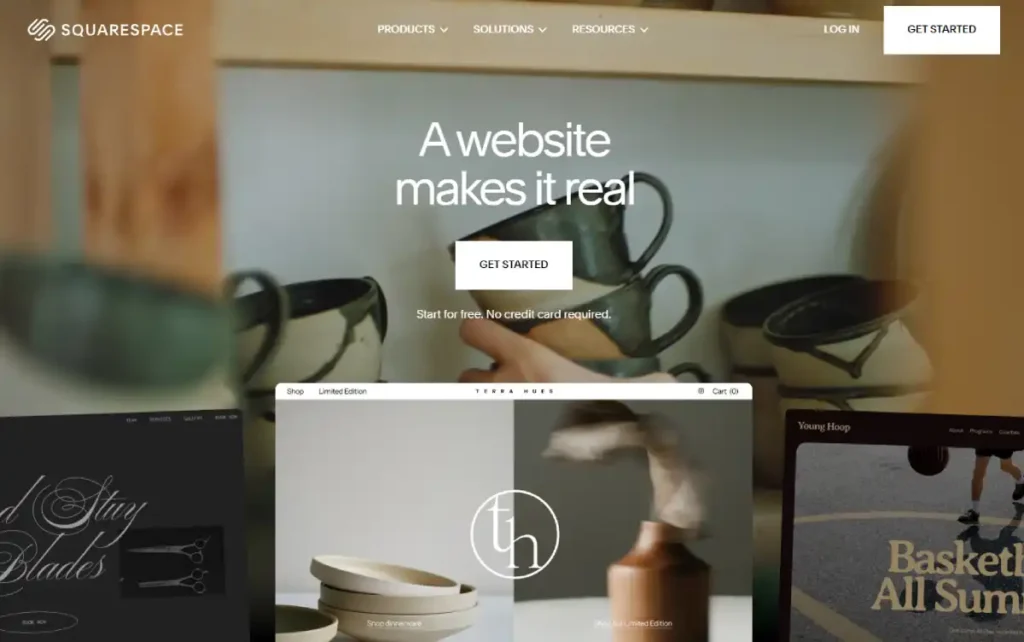
For handmade sellers whose products depend heavily on lifestyle and process photography to communicate value, jewelry, home goods, textiles, Squarespace’s best-in-class template design gives a small, curated catalog a genuinely polished, editorial presentation without hiring a designer.
Our Squarespace review covers its template library and design tools in more depth.
Key Features
Best-in-class template design: The strongest visual presentation of any platform here, suited to photography-dependent handmade categories.
Built-in blog integration: Strong content tools for makers building an audience around their process and story, not just individual products.
Zero transaction fees: Via Squarespace Payments on Commerce plans, keeping costs predictable.
Portfolio-style product pages: Particularly strong for visually driven categories like jewelry, textiles, or home decor.
Clean, beginner-friendly dashboard: Minimal technical overhead for a maker focused on production, not store administration.
Pricing
Basic Commerce is $36/month, Advanced Commerce is $65/month, both with 0% platform transaction fees via Squarespace Payments.
Wix: Best for Small, Curated Catalogs with Visual Branding
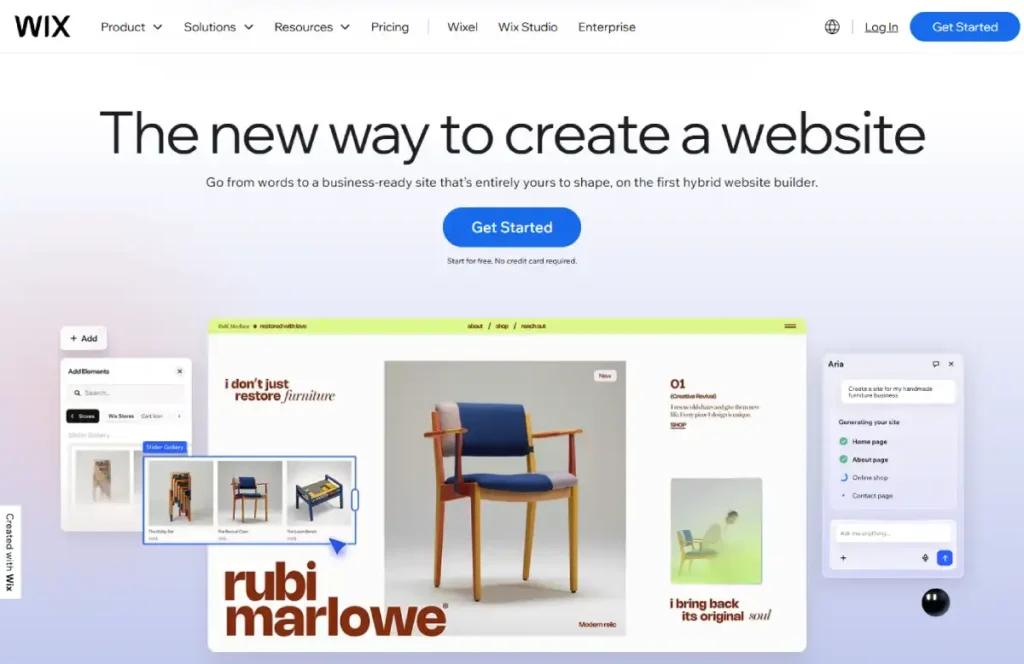
Wix’s drag-and-drop flexibility gives a handmade seller full creative control over presentation without needing design or coding skills, a real advantage for a maker with a strong visual brand identity and a small, curated product line rather than a large, frequently changing catalog.
See our full Wix review for a deeper look at its design tools.
Key Features
Drag-and-drop visual editor: The most flexible layout control of any platform here for a maker with a specific visual vision.
Wix Payments: No transaction fees when using native payment processing.
800+ templates: A large library that likely includes a close match to most handmade brand aesthetics.
Built-in marketing tools: Email campaigns and basic SEO settings included without a separate app.
Unlimited products: No hard product cap, though inventory management tools stay comparatively basic.
Pricing
Business plans start at $29/month, with no transaction fees via Wix Payments.
Etsy-to-Owned-Store Mistakes to Avoid
Treating Etsy vs. Owned Store as an Either-Or Decision
The strongest real-world pattern is running both: Etsy for discovery traffic, an owned store for brand-building and repeat customers. Closing an Etsy shop entirely to move to an owned store usually costs more in lost discovery traffic than it saves in fees, at least in the first year.
Underestimating Etsy’s Real Combined Fee Stack
Sellers frequently calculate only the 6.5% transaction fee and miss the listing fee, payment processing, and mandatory Offsite Ads once revenue crosses $10,000 annually. Calculate the full stack, not just the headline transaction rate, before comparing Etsy’s real cost to an owned store.
Migrating to an Owned Store Before You Have Any Traffic Source
An owned store with zero existing audience means zero sales until you build one, whether through social media, SEO, or paid ads. Don’t fully migrate away from Etsy’s discovery traffic until you have a real, working traffic source of your own.
Ignoring the COGS Problem Neither Platform Solves
Neither Etsy nor Shopify natively tracks raw material costs or true cost per handmade unit. Without that data, it’s easy to underprice labor-intensive products.
Consider a dedicated inventory and costing tool alongside whichever selling platform you choose.
How to Choose eCommerce Platform for a Handmade Seller
If you have no existing audience and need buyer discovery more than brand control, start on Etsy and treat the fee stack as the cost of that traffic.
If you already have some following, whether from social media or prior Etsy sales, and want to keep more of each sale while owning the customer relationship, Shopify is the strongest owned-store option.
If you want to test whether an owned store converts at all before committing financially, Big Cartel’s free plan is a genuine zero-risk way to find out.
If your products depend heavily on lifestyle or process photography to sell, Squarespace’s design quality is worth the switch from a more functional but less polished platform.
Most successful makers don’t choose one. They run Etsy for discovery and an owned store for brand-building simultaneously.
FAQ’s
Is Etsy or Shopify better for handmade sellers?
It depends on whether you already have an audience. Etsy provides built-in buyer discovery that’s hard to replicate elsewhere, useful for a new seller with no existing following.
Shopify offers lower real transaction costs and full brand ownership, but requires you to drive your own traffic, which takes time to build.
How much does Etsy really cost per sale?
The combined fee stack, 6.5% transaction fee, $0.20 listing fee, 3% plus $0.25 payment processing, and mandatory Offsite Ads (12-15%) for sellers over $10,000 in annual revenue, commonly totals 12 to 20% of each sale once fully accounted for.
Can I sell on Etsy and my own store at the same time?
Yes, and it’s the most common pattern among established handmade sellers. Shopify offers an official Etsy import app to migrate listings, and many sellers use Etsy purely for discovery traffic while building their owned store’s brand and repeat-customer base.
What’s the cheapest way to test an owned store?
Big Cartel’s free plan supports up to 5 products with zero transaction fees, making it a genuinely no-cost way to test whether an owned store converts before committing to a paid platform like Shopify.
Do I need a business license to sell handmade goods online?
Requirements vary by location and revenue level, and this guide doesn’t cover legal or tax setup. Check your local and state requirements separately from the platform decision.
What’s the difference between this guide and a best platform for artists guide?
This guide covers physical, hand-produced goods like jewelry, textiles, and home decor, where production capacity and materials storytelling matter most. A guide for artists covers digital and print art, commissions, and licensing, a distinct product type with different platform needs.
Final Thoughts
For handmade sellers, the platform decision is really a tradeoff between Etsy’s built-in buyer discovery and an owned store’s brand ownership and lower long-term fees.
Most established makers don’t choose one exclusively.
They use Etsy to reach new buyers and an owned store like Shopify or Big Cartel to build a brand and retain repeat customers.
If you’re deciding between staying on Etsy or building your own presence, or want to understand the platforms beyond handmade specifically, our Shopify review and WooCommerce review, alongside the best platform for artists guide, are good next stops.