
Selling art, whether original paintings, digital illustration, or licensed prints, has a different dominant need than physical handmade goods: portfolio presentation has to come first, commissions and licensing need their own workflow, and print fulfillment (canvas, framed, archival paper) requires a different technical setup than shipping a finished handmade product.
This guide ranks 5 platforms specifically for that portfolio-first, commission-and-licensing need, distinct from a handmade sellers guide covering physical, hand-produced goods.
In this guide, you’ll learn which platforms present a portfolio the way a gallery would, how commission and licensing workflows actually work across platforms, and where print-on-demand fulfillment fits into an artist’s specific setup.
Key Takeaways
- Squarespace’s design quality and portfolio-style templates remain the strongest fit for artists prioritizing presentation, the same reason it suits handmade sellers with strong visual branding.
- Format is purpose-built specifically for artists and photographers, combining portfolio presentation, client proofing galleries, and automated print fulfillment (through partners like White House Custom Colour) in one system, with artists keeping 100% of revenue minus payment processing.
- Big Cartel’s minimalist, gallery-like free tier (5 products, no transaction fees) works well for an artist with a small, curated collection of originals or limited-edition prints.
- Shopify paired with a print-on-demand app like Printful or Gelato gives an established artist full brand control and the widest product range (canvas, apparel, phone cases) without managing physical inventory.
- Etsy remains a strong entry point for artists selling prints or smaller originals at accessible price points, with over 90 million active buyers already searching for art, though 6.5% transaction fees plus listing fees apply per sale.
Quick Comparison
| Platform | Starting Price | Portfolio & Fulfillment Model | Best For |
|---|---|---|---|
| Squarespace | $36/month (Basic Commerce) | Best-in-class templates, no native POD | Artists prioritizing premium visual presentation |
| Format | Plans vary, artist-specific pricing | Portfolio, client proofing, automated print fulfillment | Photographers and artists wanting an all-in-one, artist-built system |
| Big Cartel | Free (5 products), ~$9.99+/month | Minimalist, gallery-style, no transaction fees | Small, curated collections of originals or limited editions |
| Shopify + POD app | $25/month + POD provider costs | Full brand control, wide product range via Printful/Gelato | Established artists building a long-term brand |
| Etsy | Free to list | Marketplace discovery, built-in buyer traffic | Prints and smaller originals at accessible price points |
The Real Decision Factors for Artists
A general small-business platform ranking cares about integration and setup speed. An artist’s real evaluation starts with a different question: does this platform present work the way a gallery or professional portfolio would, or does it force artwork into a generic product-grid template built for retail goods?
The first real test is portfolio presentation quality, since for an artist, the store is also the resume. The second test is how commissions, custom or made-to-order pieces, and print fulfillment fit into the platform’s actual workflow, not just whether selling art is technically possible.
A platform that treats a $3,000 original painting the same as a $15 sticker misses the presentation and pricing nuance a serious artist needs.
We evaluated each platform on portfolio and gallery-style presentation quality, native or integrated print fulfillment options, and commission structure across marketplace versus owned-store models, cross-referenced against the best platform for handmade sellers guide for the adjacent but distinct physical-goods use case.
Squarespace: Best for Premium Visual Presentation
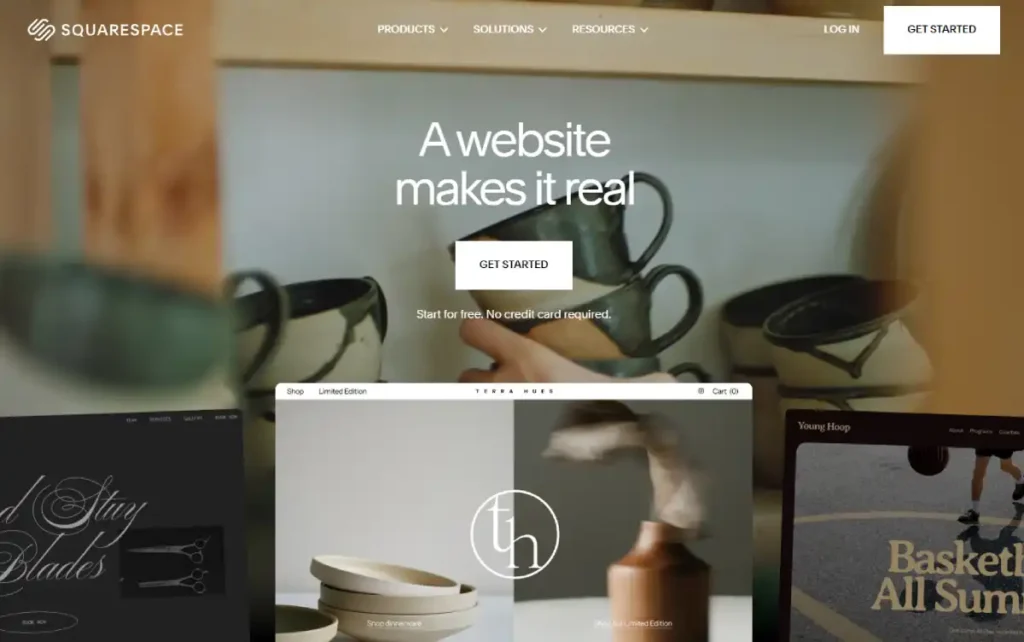
Squarespace’s best-in-class template design remains the strongest fit for artists whose work depends on premium visual presentation, the same design quality that draws designer fashion labels and handmade sellers with a strong visual brand.
For a painter, illustrator, or photographer whose portfolio needs to look gallery-quality before a single sale happens, Squarespace’s templates do that work without hiring a designer.
See our full Squarespace review for more on its broader feature set.
Key Features
Best-in-class template design: The strongest visual presentation of any general platform here, suited to portfolio-style artwork display.
Built-in blog integration: Strong content tools for artists building an audience around their process, technique, or artistic journey.
Portfolio-style product pages: Particularly effective for showcasing original work and limited editions with gallery-like presentation.
Zero platform commission on sales: Squarespace Payments charges no marketplace-style cut, unlike the percentage-based commission a gallery marketplace takes.
Clean, beginner-friendly dashboard: Minimal technical overhead for an artist focused on creating, not store administration.
Pros
- The strongest template quality of any general-purpose platform, presenting artwork the way a gallery or professional portfolio would.
- Strong native blog and content tools support building an audience around artistic process, not just individual pieces for sale.
Cons
- No native print-on-demand fulfillment; artists selling prints need to integrate a separate POD service or handle fulfillment manually.
- Limited product variant options (3 max) can be a real constraint for artists offering multiple print sizes or framing options.
Who It’s Best For
Painters, illustrators, and photographers prioritizing premium visual presentation for original work and limited editions, willing to add a separate print fulfillment integration if needed.
Pricing
Basic Commerce is $36/month, Advanced Commerce is $65/month, both with 0% platform transaction fees via Squarespace Payments.
Format: Best for an All-in-One Artist-Built System
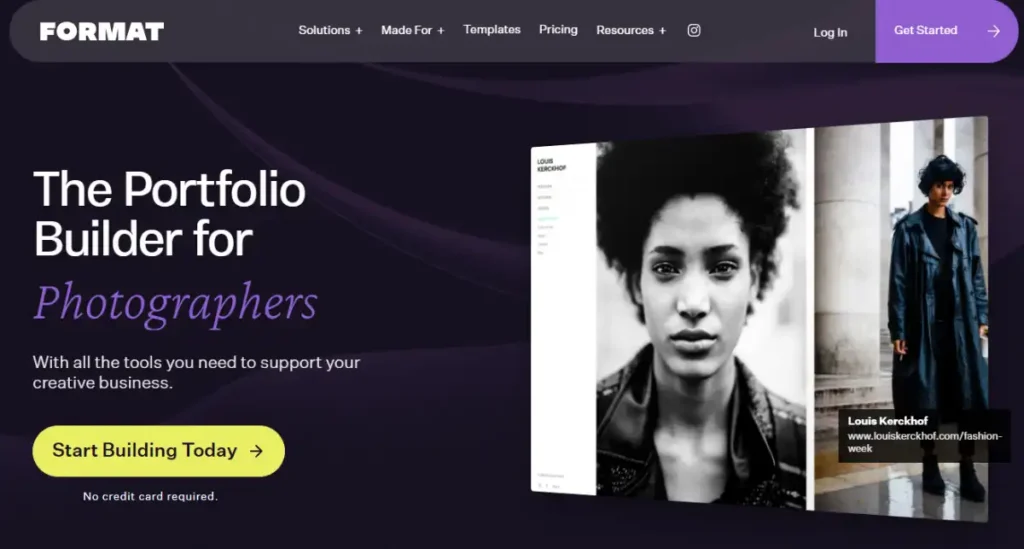
Format is purpose-built specifically for artists and photographers, not adapted from a general ecommerce template, combining portfolio presentation, client proofing galleries, and automated print fulfillment through partners like White House Custom Colour into a single system. Artists keep 100% of revenue minus standard payment processing fees, with no platform commission on any tier.
Key Features
Client proofing galleries: Password-protected galleries let clients favorite, comment on, and approve selections, streamlining commission and photography client workflows.
Automated print fulfillment: Direct integration with print partners handles order routing without manual fulfillment work on the artist’s end.
Zero platform commission: Artists retain 100% of revenue minus payment processor fees, unlike marketplace models taking a percentage cut.
Unlimited client gallery albums: Useful for photographers managing multiple client shoots or commission projects simultaneously.
Mobile-optimized presentation: Built specifically for visual work being viewed and purchased on mobile devices.
Pros
- Built specifically for artists and photographers, not adapted from a general retail template, which shows in commission and client-proofing workflows general platforms don’t replicate.
- Zero platform commission means artists keep the full sale price minus only standard payment processing.
Cons
- Strict image limits on lower tiers can constrain portfolio growth for a prolific artist with a large body of work.
- Template-based architecture offers no code access, a real constraint for artists wanting deep custom design control.
Who It’s Best For
Photographers and artists wanting an all-in-one system for portfolio presentation, client proofing, and print sales without juggling separate tools for each function.
Pricing
Plans vary by tier and feature set; contact Format directly for current pricing based on portfolio size and print fulfillment needs.
Big Cartel: Best for Small, Curated Collections
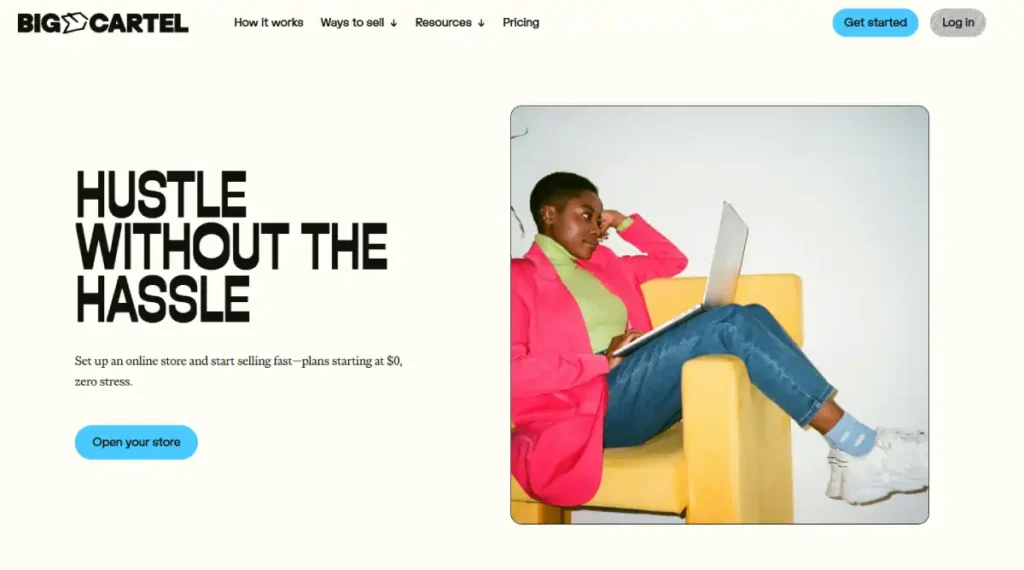
Big Cartel’s minimalist, gallery-like default presentation and genuinely free tier for up to 5 products make it a strong fit for an artist with a small, curated collection of originals or limited-edition prints who wants zero transaction fees while testing whether an owned store converts.
Our Big Cartel review covers its plans and features in more depth.
Key Features
Zero-cost portfolio testing: Up to 5 pieces can go live without spending anything, useful for gauging real buyer interest before committing budget to a paid tier.
No cut on any sale: Big Cartel doesn’t take a percentage of revenue at any tier, so a sold original or print keeps its full price minus payment processing.
Gallery-style defaults built for creators: The visual starting point looks like a small gallery, not a retail catalog, which suits original artwork without heavy customization.
Bring your own domain: Even on the free tier, a custom domain is supported, so the branded presence doesn’t have to wait for a paid upgrade.
Pros
- Lets an artist gauge real buyer interest in a small body of work before spending anything on a platform.
- The gallery-style default aesthetic suits original artwork presentation without heavy customization.
Cons
- The 5-piece cap on the free tier means an artist with a larger active collection outgrows it quickly.
- No native print fulfillment integration; artists selling prints need a separate solution for production and shipping.
Who It’s Best For
Artists with a small, curated selection of originals or limited editions wanting to test an owned store at zero cost before scaling further.
Pricing
Free for up to 5 pieces. Paid tiers scale from roughly $9.99 to $15/month, with payment processing as the only added cost at any level.
Shopify + POD App: Best for Established Artists Building a Long-Term Brand
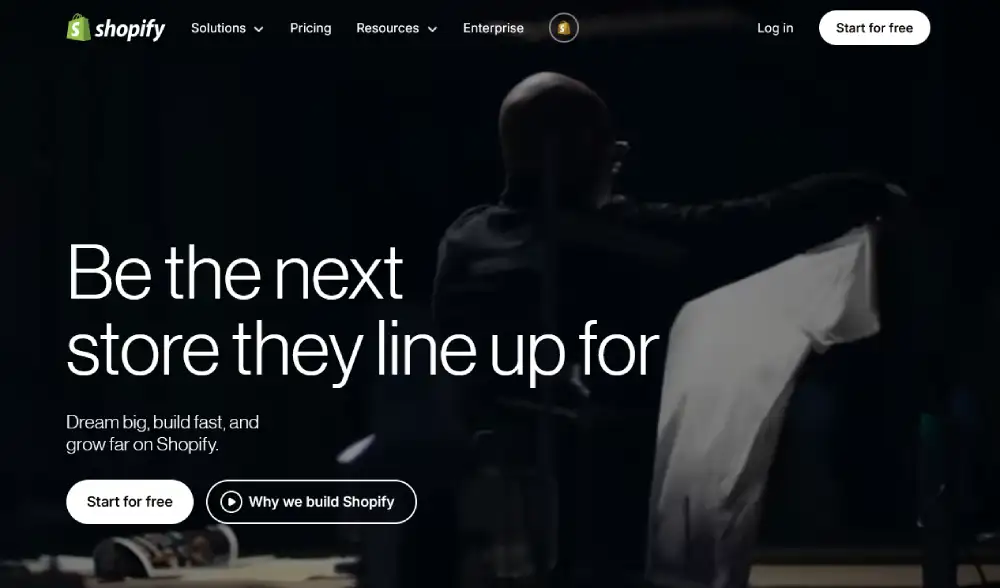
For an established artist ready to build a real brand and stop paying marketplace commissions, Shopify paired with a print-on-demand app like Printful or Gelato gives full control over pricing, customer data, and long-term growth, with themes optimized for visual products and the widest product range, canvas, apparel, phone cases, of any platform here.
Key Features
Full brand and pricing control: Complete ownership of customer data and pricing, unlike marketplace models where the platform partly owns the relationship.
POD app integration: Printful, Gelato, and other providers handle print production and fulfillment automatically once connected.
Visual-product-optimized themes: Layouts built for showcasing artwork rather than adapted from generic retail templates.
Wide product range via POD: Offer prints, apparel, phone cases, and home decor from the same artwork without managing physical inventory.
Etsy import app: Migrate an existing Etsy shop’s listings directly rather than manually recreating each piece.
Pros
- Full ownership of customer data and pricing, ending the marketplace commission structure of Etsy, Saatchi, or similar platforms.
- The widest product range of any platform here when paired with a POD app, since the same artwork can appear across dozens of product types.
Cons
- The $25/month cost (plus POD provider costs) is a real ongoing commitment compared to Etsy’s free-to-start marketplace model.
- No built-in buyer discovery; driving traffic to a new, independent store is the artist’s responsibility from day one.
Who It’s Best For
Established artists or photographers ready to build a long-term brand and stop paying marketplace commissions, especially those already selling on Etsy or Redbubble wanting to graduate to a dedicated storefront.
Pricing
Basic plan starts around $25 to $29/month, plus separate per-order costs from whichever POD provider (Printful, Gelato) is connected.
Etsy: Best for Prints and Smaller Originals at Accessible Price Points

Etsy’s over 90 million active buyers give artists instant access to a huge, already-searching audience, particularly strong for prints, illustrations, and smaller originals at accessible price points, making it a natural entry point for emerging artists without an existing following.
Key Features
Built-in buyer discovery: Over 90 million active buyers already searching for art and handmade goods.
Low setup friction: A listing can go live in minutes without a separate website or design work.
Established buyer trust: Etsy’s marketplace reputation reduces the trust barrier a brand-new independent store has to overcome alone.
Checkout with zero setup: Etsy Payments is active from the first listing, so there’s no separate gateway account to configure before a first sale can happen.
Pros
- The strongest built-in buyer discovery of any platform here, particularly valuable for an emerging artist with no existing following.
- Low setup friction gets a first listing live in minutes, without building a website first.
Cons
- The combined fee stack, listing fees, a 6.5% transaction fee, and payment processing, squeezes margin more than an owned store, especially on lower-priced prints.
- Etsy, not the artist, owns the customer relationship and much of the buyer discovery channel long-term.
Who It’s Best For
Emerging artists selling prints, illustrations, or smaller originals at accessible price points who need buyer discovery more than full brand control, at least initially.
Pricing
Free to list. $0.20 listing fee per item, 6.5% transaction fee, plus standard payment processing fees.
Platform Pitfalls That Undersell Your Work
Treating Every Piece the Same Way a Retail Product Grid Would
A $3,000 original and a $15 print need different presentation, pricing context, and purchase flow. Choosing a platform or template that flattens all work into an identical generic product card misses the storytelling that helps justify original-art pricing.
Committing to One Platform Exclusively
Most working artists treat platforms as channels in a broader strategy: prints through Etsy or Fine Art America, originals through Saatchi or an owned store, portfolio presentation through Format or Squarespace. Testing across multiple channels reduces the risk of relying on a single platform for all income.
Underestimating Marketplace Commission on Higher-Value Original Work
A 35 to 50% commission on a curated gallery marketplace is a real, significant cut on a high-value original painting. Calculate what an owned store, even with the cost of driving your own traffic, would actually net before assuming marketplace exposure is worth that commission at higher price points.
Skipping Client Proofing Tools for Commission-Based Work
Artists and photographers doing commission work benefit significantly from proofing and approval tools that reduce back-and-forth email exchanges. Platforms like Format build this in natively; general platforms typically don’t.
How to Choose an eCommerce Platform for an Artist
If premium visual presentation matters most and you’re comfortable adding a separate print fulfillment integration, Squarespace’s design quality is the strongest general-purpose option.
If you want portfolio presentation, client proofing, and print fulfillment all built specifically for artists in one system, Format is purpose-built for exactly that combination.
If you have a small, curated collection and want to test an owned store at zero cost, Big Cartel’s free tier removes the financial risk.
If you’re established and ready to stop paying marketplace commissions, Shopify paired with a POD app gives full brand and pricing control.
If you’re emerging with no existing following and need buyer discovery, Etsy’s built-in traffic is the fastest way to get real sales data.
FAQ’s
Should I sell on Etsy or build my own store as an artist?
The answer hinges on whether you already have an audience finding your work. Etsy provides discovery traffic that’s valuable for emerging artists, but the combined fee stack squeezes margin.
An owned store on Shopify or Squarespace offers full brand control and better margins once you can drive your own traffic.
What’s the best platform for selling both digital and print art?
Shopify paired with a POD app like Printful or Gelato handles both well, letting the same artwork sell as physical prints and, with a digital delivery app, as instant digital downloads from one store.
Do I need a dedicated artist platform like Format, or will Shopify work?
It depends on whether client proofing and commission workflows matter to your business. Format’s built-in proofing galleries and print fulfillment integration suit photographers and commission-based artists specifically.
Shopify offers broader ecommerce flexibility but requires adding apps to replicate those artist-specific workflows.
How much commission do art marketplaces typically take?
It varies significantly by platform: Saatchi Art takes around 40%, Society6 commonly runs 5 to 20% depending on tier, Etsy charges a 6.5% transaction fee plus listing fees, and Fine Art America takes no commission on original artwork sales (only on print fulfillment markup).
Can I sell commissioned or made-to-order artwork through these platforms?
Yes, though the workflow varies. Format’s client proofing tools are specifically built for this.
On Shopify or Squarespace, commissioned work typically requires custom product listings or a dedicated app to manage the request, approval, and payment process.
What’s the difference between this guide and a best platform for handmade sellers guide?
This guide covers artists selling original or print-based artwork, where portfolio presentation, commissions, and licensing matter most. A handmade sellers guide covers physical, hand-produced goods like jewelry or textiles, where production capacity and materials storytelling are the dominant concern instead.
Final Thoughts
For artists, the platform decision comes down to how well the platform presents work the way a gallery or professional portfolio would, and how commissions, print fulfillment, and licensing fit into the actual workflow.
Squarespace and Format serve the presentation-first need most directly, Big Cartel offers a zero-cost way to test an owned store, and Shopify plus a POD app gives established artists full brand control once marketplace commissions no longer make sense.
If you’re deciding between an art-specific approach and the broader handmade goods category, or want to understand the print-on-demand fulfillment layer in more depth, the best platform for handmade sellers guide and the best platform for print on demand guide are good next stops.