
There are eight ways to run an ecommerce business. This guide covers all eight, in plain terms.
Most people who research this end up more confused, not less. One article says dropshipping is dead. Another says it made someone six figures last year. A third pushes subscription boxes as the real opportunity in 2026.
All three can be true at once, because they are talking about different businesses with different money, different time, and different goals.
That is the real problem with most business model advice. It treats one model as universally best, instead of asking what actually fits your situation.
For each of the eight models here, you will learn three things. How much it costs to start. How much profit you actually keep per sale.
How fast you can expect your first sale. Real numbers, not vague ranges pulled from nowhere.
Pick based on your own money, time, and skills. Not on which model sounds exciting this year.
Key Takeaways
- Cheap to start usually means thin profit. Dropshipping and print on demand cost very little to launch. But you keep less of each sale.
- Selling on Amazon, eBay, or Etsy costs more than people expect. These platforms take a real cut, often 10 to 40 percent of each sale.
- Getting your first sale is not the same as making steady profit. A first sale can happen fast. Real profit usually takes months either way.
- Subscriptions and wholesale pay off slower, but pay more over time. One loyal customer is worth more than one single sale.
- A physical store adding an online option is not really a new model. It is an extra feature added to whatever you already sell.
The Eight Models, Side by Side
Here is the short version of all eight. Each one is explained in full further down.
| Model | Startup Cost | What You Keep | First Sale |
|---|---|---|---|
| Standard online store (B2C) | $500 to $10,000+ | Good | Weeks to months |
| Wholesale (B2B) | Built on top of an existing store | Lower per item, higher per order | Months |
| Dropshipping | Under $200 | Thin, 10 to 20 percent | 2 to 6 weeks |
| Print on demand | Under $200 | Thin to moderate | A few weeks |
| Digital products | Near $0 to $100 | Very high | Days to weeks |
| Subscription box | $2,000 to $10,000+ | Moderate, grows over time | Weeks, profit takes longer |
| Selling on a marketplace | Low to start | 60 to 90 percent after fees | Days |
| Online plus in-store (hybrid) | Depends on your base model | Same as your base model | Immediate, for existing customers |
1. B2C: Selling Directly to Customers
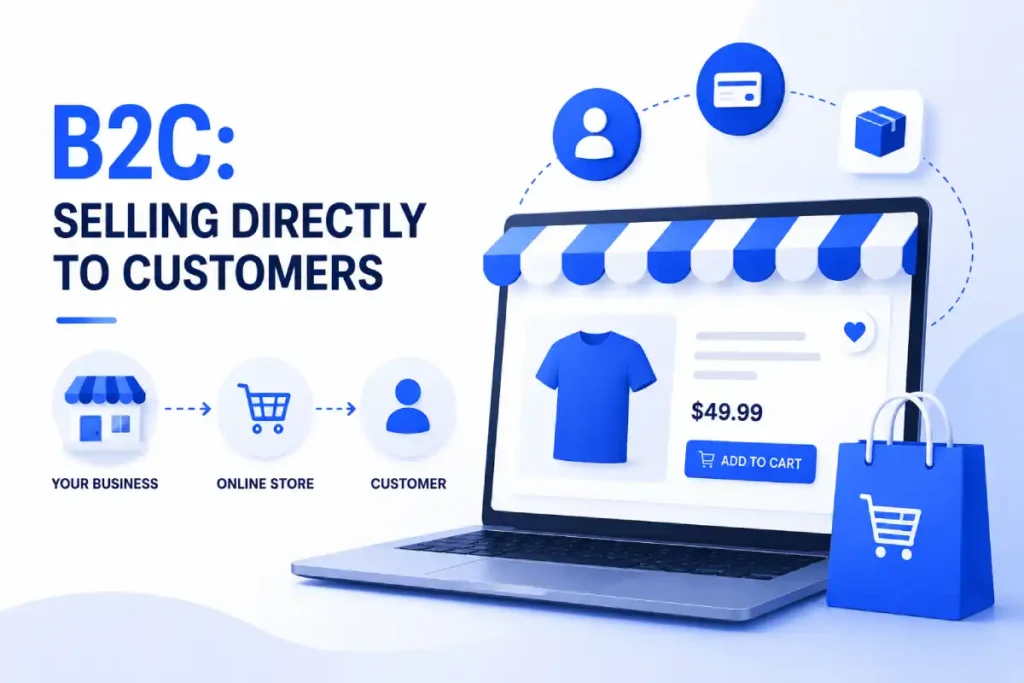
This is the model most people picture first. You sell straight to individual shoppers through your own store.
Startup cost depends on what you sell. A simple launch runs $500 to $10,000. A branded product line with real stock costs more.
The upside is margin. You control your prices. Nobody takes a cut like a marketplace would.
The downside is traffic. No one finds your store on their own. You have to build that traffic yourself, through ads, search, or social media.
2. B2B and Wholesale
Here you sell to other businesses, not individual shoppers. Orders are bigger. There are just fewer of them.
This model almost never stands alone. Most sellers add it on top of a store they already run. That means company accounts, bulk pricing, and pay-later terms, not a whole new setup.
One wholesale account can be worth more over a year than many single sales. For the full cost breakdown, see this cluster’s wholesale ecommerce guide.
3. Dropshipping
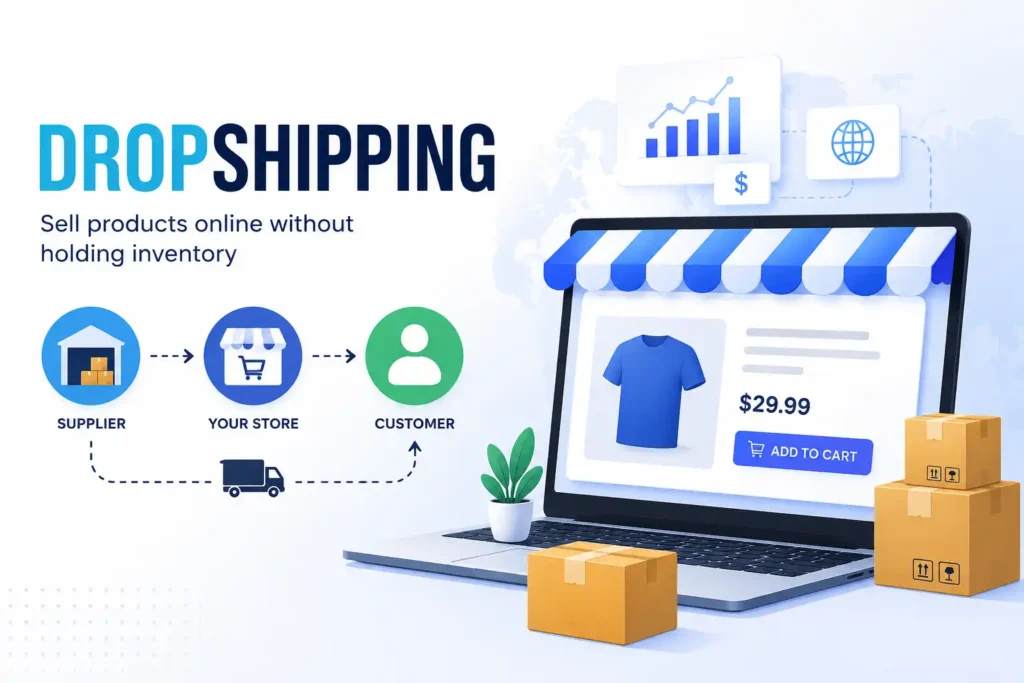
You never buy stock. When someone orders, your supplier ships it to them directly.
Startup cost can stay under $200. But profit is thin, usually 10 to 20 percent, since you pay a supplier’s price on top of your own marketing.
A first sale can come in a few weeks. Steady profit takes longer and depends on picking the right product and supplier.
For the full process, see this cluster’s dropshipping guide.
4. Print on Demand
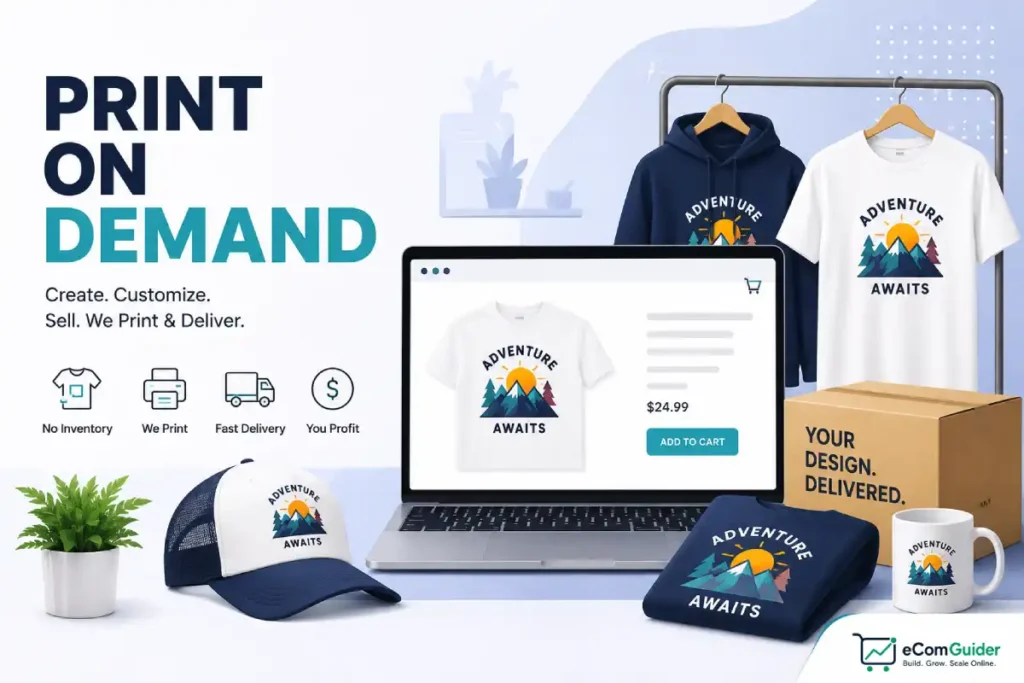
A supplier prints your design on a product only after someone buys it. Just like dropshipping, you never hold stock.
Setup cost is close to nothing beyond a domain and platform fees. Margins sit a bit higher than dropshipping, since you are selling your own design, not just a generic item.
For a full comparison of the top providers, see this cluster’s print-on-demand guide.
5. Digital Products
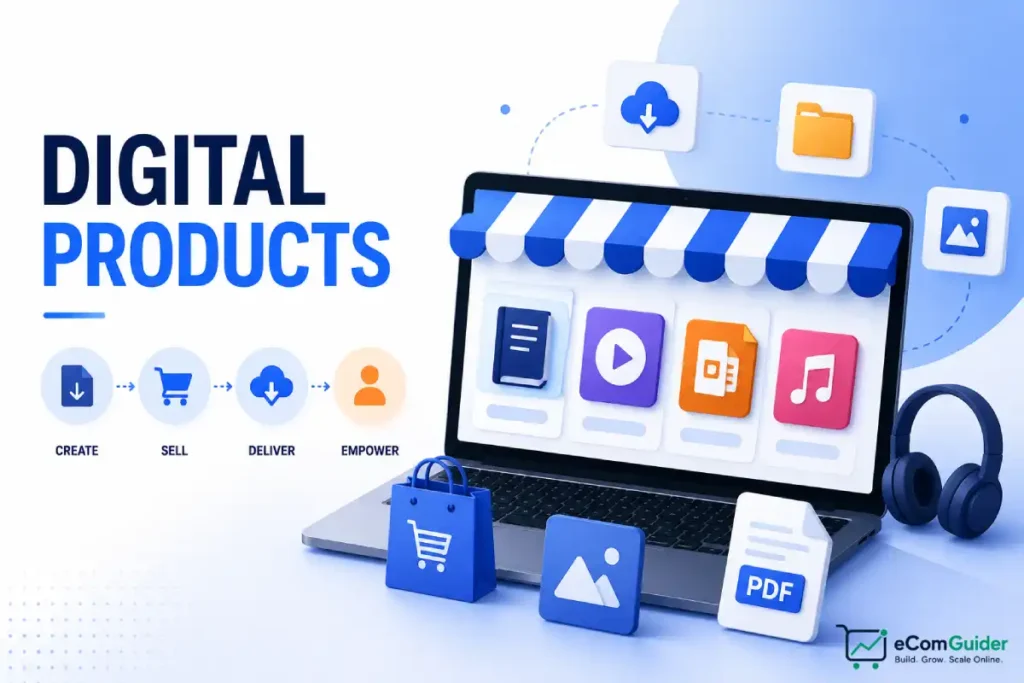
Think templates, ebooks, or design presets. Once you make the file, it costs nothing to sell it again.
This is the highest-margin model here. There is no physical cost per sale at all. Startup cost is close to $0 on most platforms.
The catch is simple. Your first sale depends completely on whether people actually want what you made.
6. Subscription Box
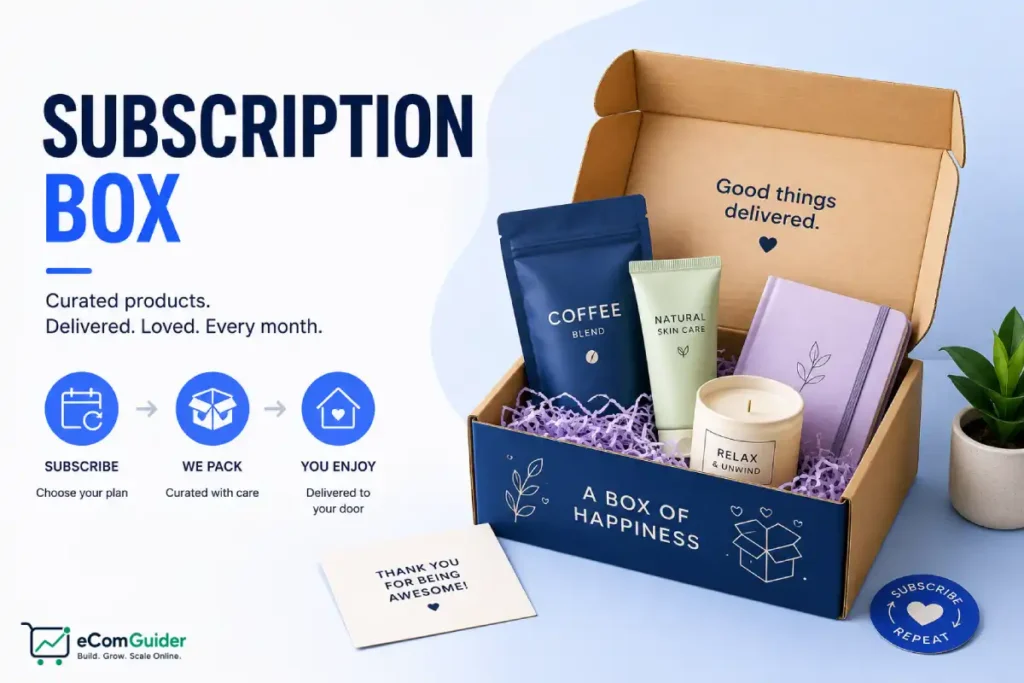
Customers pay you on a regular schedule, usually monthly, for a curated box or ongoing access.
This model pays off slower than a one-time sale. But it pays more over time, since a subscriber sticks around.
Real startup cost runs $2,000 to $10,000, mostly for sourcing and packaging, not software. Cratejoy, Shopify with a subscription app, and WooCommerce with WooCommerce Subscriptions all work, but their costs differ. See the full comparison in this cluster’s subscription box guide.
7. Selling on a Marketplace
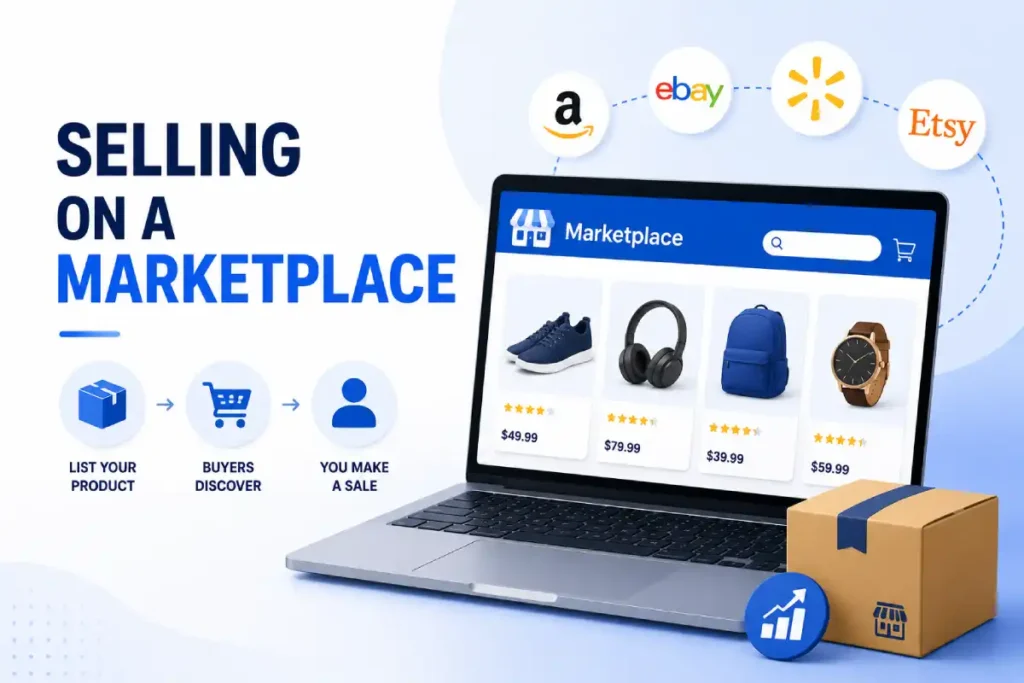
Here you sell through Amazon, eBay, or Etsy instead of your own store. The marketplace brings the shoppers. You bring the product.
The real cost is fees, and they add up faster than most people expect.
- Amazon commonly takes 15 to 40 percent, depending on category and whether you use their fulfillment service, known as FBA
- eBay runs roughly 13 to 20 percent once you include promoted listings
- Etsy lands around 10 to 12 percent, until you pass $10,000 in yearly sales, at which point paid offsite ads become mandatory
In return, you get an audience that already exists. A sale can happen within days of listing your product.
8. Hybrid Retail: Online Plus In-Store
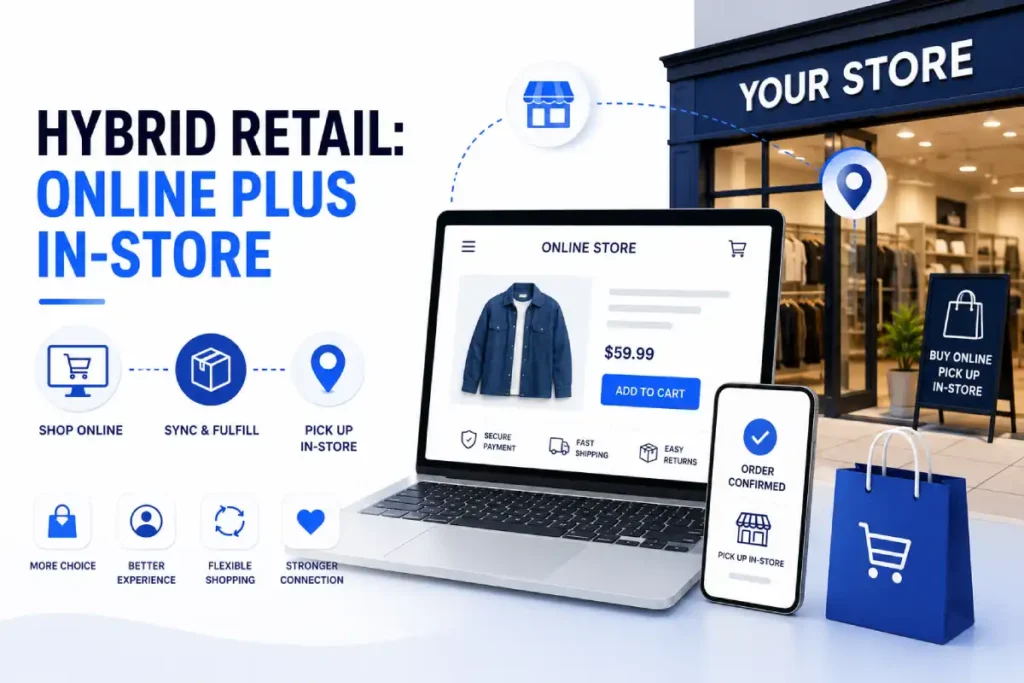
This is not really its own model. It is an extra layer added on top of whatever you already run, usually B2C.
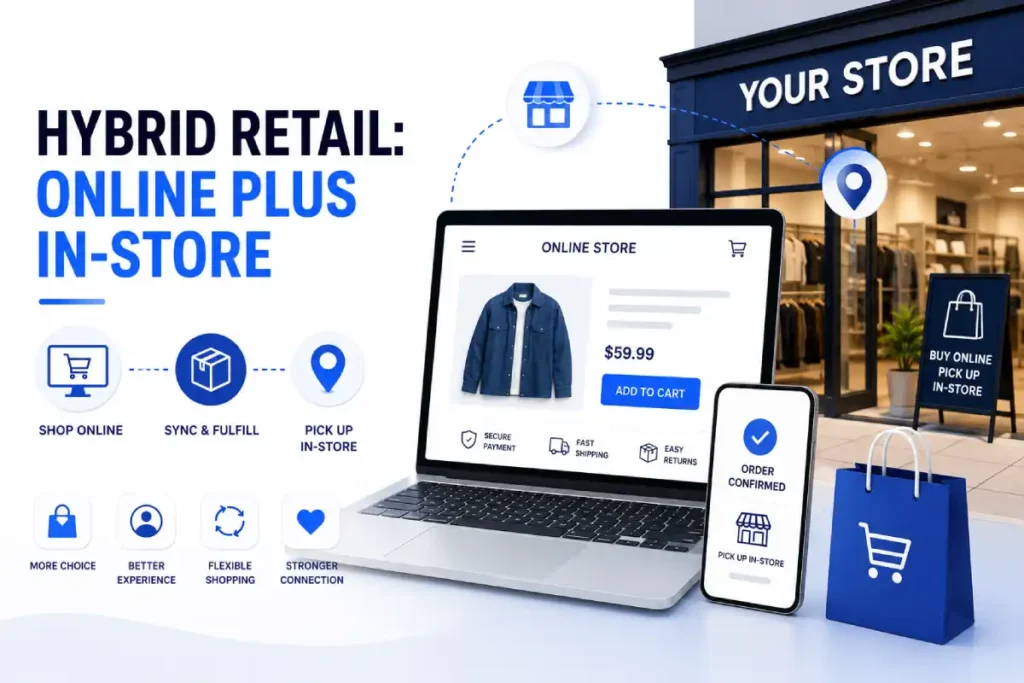
Two things matter here. Your inventory needs to match correctly between your physical store and your online store. And if you want pickup in store, you need a system that supports it.
Shopify POS handles this well on its own. A different point-of-sale system paired with a different platform can also work, but someone has to keep that connection working, not just set it up once.
For the full setup process, see this cluster’s brick-and-mortar to online guide.
Which One Should You Actually Pick
- Almost no money to start? Try dropshipping, print on demand, or digital products. All three work under $200, and digital products can work for close to $0.
- Want your first sale fast? Sell on a marketplace. The audience is already there.
- Want the highest profit per sale? Digital products. There is no physical cost at all.
- Already run a physical store? Add hybrid retail on top of it. Do not start over from scratch.
- Want repeat customers instead of one-time buyers? Try a subscription box. Just know that real profit takes longer to show up.
- Selling to businesses, not shoppers? Go with wholesale, usually added onto a store you already have.
FAQ for Choosing an eCommerce Business Model
Which ecommerce business model costs the least to start?
Digital products. Your main cost is the time it takes to make the first file. Dropshipping and print on demand are close behind, both usually under $200.
Which model has the best profit margin?
Digital products, since there is no physical cost per sale. Selling through a marketplace can also keep 60 to 90 percent of a sale, depending on fees.
Is dropshipping still worth it in 2026?
Yes, if you actually research your product and check your supplier first. Margins are thin, usually 10 to 20 percent. Most failures come from skipping that research, not the model itself.
How much do marketplace fees really cost?
It depends on the platform. Amazon often takes 15 to 40 percent. eBay runs 13 to 20 percent. Etsy is around 10 to 12 percent, before mandatory offsite ads kick in above $10,000 a year.
Can I run more than one model at the same time?
Yes, and many sellers do exactly this. A common setup is a B2C store as the base, with wholesale, marketplace listings, or in-store pickup added on top.
Which model is easiest for a total beginner?
Print on demand or digital products. Neither requires managing suppliers or physical stock. Selling on a marketplace is also easy to start, since the platform handles much of the setup for you.